November 2026 Skywatching: Taurids, Leonids and Four Visible Planets
November brings two Taurid peaks, the Leonids, a four-planet dawn display and a Beaver Moon supermoon. Here’s when and where to look.
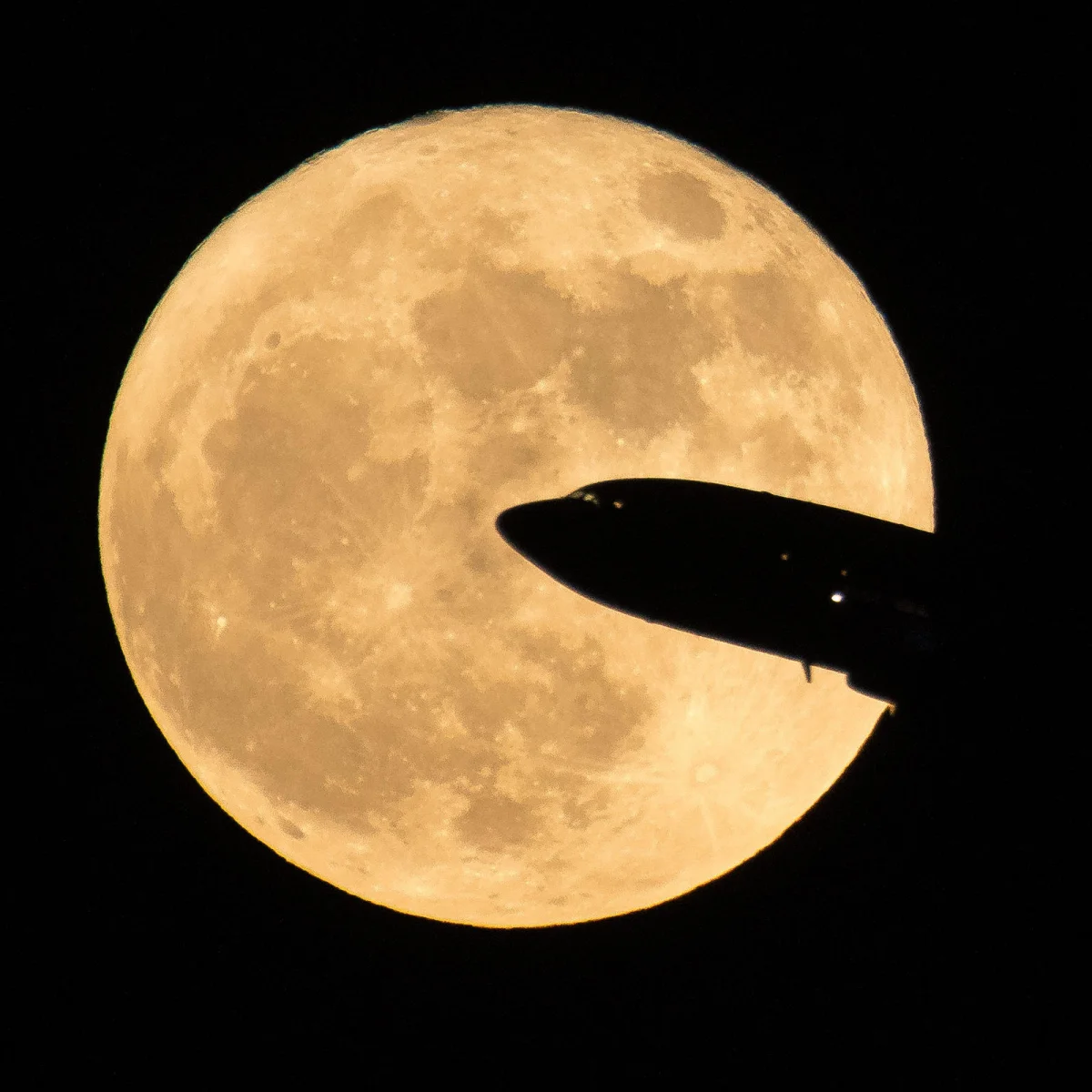
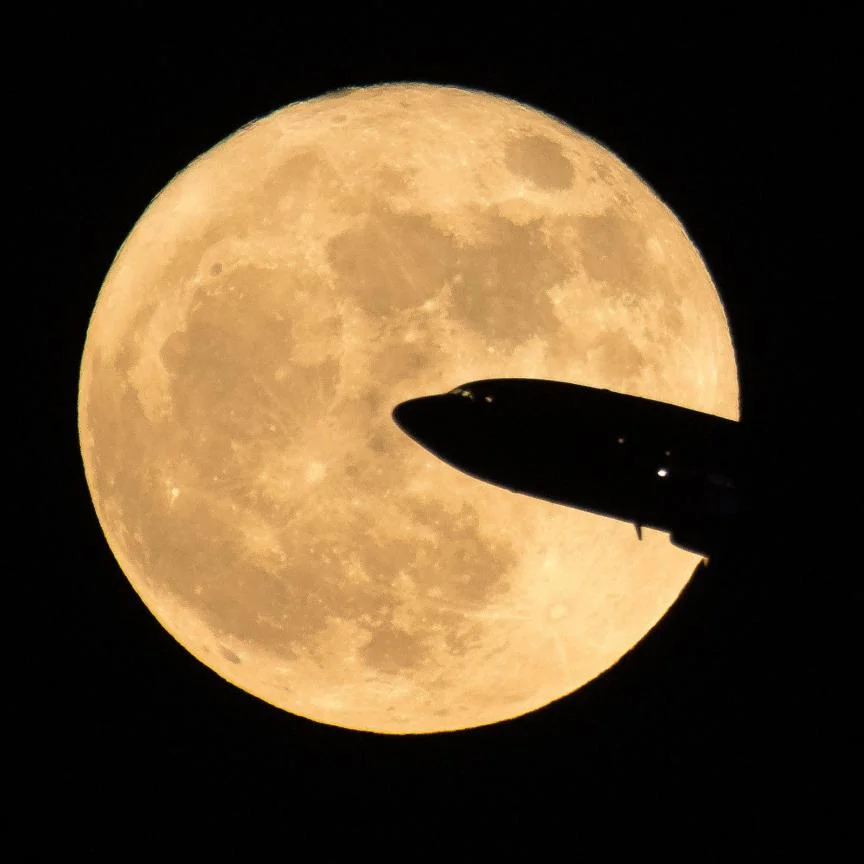
November’s sky rewards people who look more than once. The month has no single event that dominates the calendar, but it offers several chances to catch planets, meteor showers and changing lunar views. The best plan depends on what you want to see: the darkest skies arrive with the new moon, while the brightest lunar display comes near Thanksgiving.

Earlier sunsets make evening observing easier, and the month’s planet show extends into the hours before dawn. Every planet appears in the November sky at some point, though Mercury, Venus, Uranus and Neptune take more effort to spot than the naked-eye planets. Binoculars or a telescope help with the faintest targets; for meteors, your eyes and a dark location are the better tools.
Planets through the month
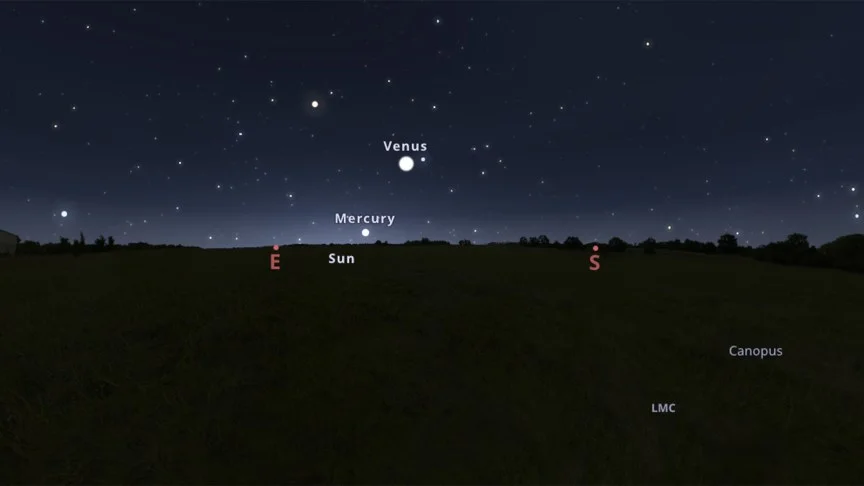
Mercury starts the month close to the sun after its October appearance in the evening sky. That makes it a poor target early on. On Nov. 20, it reaches western elongation, the point in its orbit when it appears farthest from the sun in the morning sky. Mercury should then be easier to find before sunrise for the remainder of the month, though the viewing window is brief.
Venus sits near the sun at dawn throughout November. It’s technically visible each morning, but the glare makes it harder to pick out at first. As the month goes on, Venus appears farther from the sun and becomes a more practical target.

Mars rises in the east shortly after midnight at the start of November, then comes up earlier as the month advances. Look in the early morning for the best view; toward the end of the month, midnight is a reasonable time to start looking.
Jupiter keeps close company with Mars. The pair rise at roughly the same time and appear near one another throughout the month. Regulus, a bright star, completes a trio that can be seen without optical aid.
Saturn is visible from sunset until shortly before sunrise, crossing the sky from east to west during the night. Early evening is the most convenient time to find it. Binoculars or a telescope reveal its rings, which aren’t visible to the unaided eye.

Neptune appears near Saturn and follows a similar path across the sky, but it’s too faint for most people to see without binoculars or a telescope.
Uranus rises shortly before sunset and sets around sunrise. Its opposition on Nov. 25 puts it opposite the sun in Earth’s sky, making it the most visible it will be this month. It still takes binoculars or a telescope to see well.
Nov. 2–3: Moon, Mars and Jupiter meet
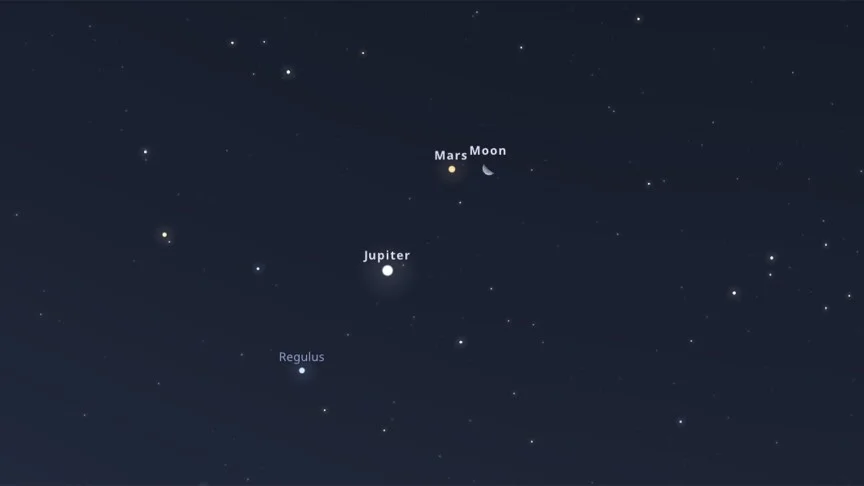
The month opens with an easy-to-find gathering. On Nov. 2, the moon appears close to Mars, with Jupiter nearby. All three are visible to the naked eye, and they move across the sky together during the night. Regulus joins them, adding a fourth bright point to the scene.

On Nov. 3, the moon shifts to the other side of Regulus. The four objects remain close enough to make a convenient group for casual observing. Mars, Jupiter and Regulus draw closer together as November continues, but the moon moves away after the 3rd. If clouds spoil the first evening, the second offers another chance, with the moon in a different position.
Nov. 4–5: Southern Taurids bring fireball potential
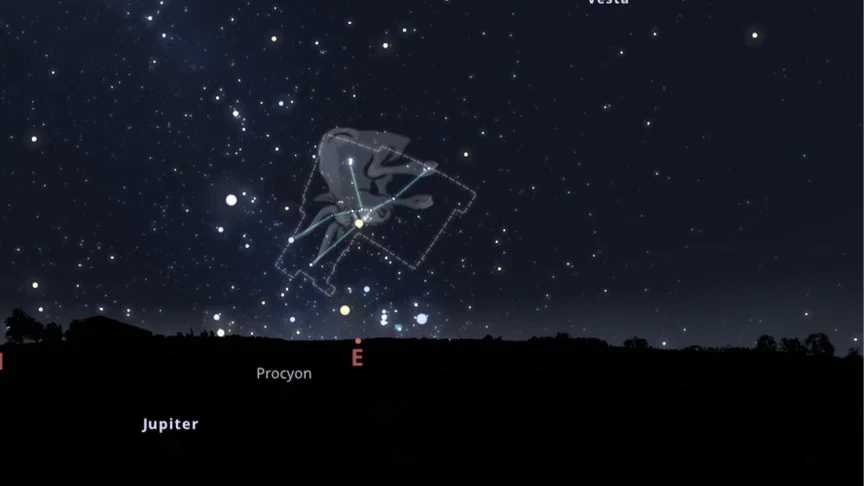
The Southern Taurids have been active since Sept. 20 and continue through Nov. 20, but their peak falls on the night of Nov. 4 and the morning of Nov. 5. This is a modest shower by count, with about five meteors per hour expected. Its appeal is the possibility of bright fireballs: fewer meteors can still make for a memorable night when one flashes across the sky.
The moon will be 22% illuminated, a level the American Meteor Society describes as favorable for meteor watching. For a better chance of seeing fainter streaks, get away from bright local lighting and give your eyes time to adjust. Dress for the weather, too; meteor watching involves a lot of standing or sitting still.

The meteors seem to come from Taurus, which rises in the east soon after sunset and crosses the sky before setting in the west just before sunrise. You don’t need to stare directly at the constellation: meteors can appear in other parts of the sky. A wide, unobstructed view is more useful than trying to follow each one back to its source.
Nov. 9: Dark skies for stars and photography
The new moon on Nov. 9 makes this the darkest night of the month. With little moonlight to wash out fainter objects, it’s a good time to look for stars, try night-sky photography or seek out dimmer planets such as Uranus and Neptune. The difference is practical: a bright moon can overwhelm faint points of light, while a moonless sky gives them a better chance to stand out.
Nov. 9 is also Carl Sagan Day, an unofficial occasion to remember the astronomer. If clouds or cold keep you indoors, Sagan’s Cosmos series is available for free on the Internet Archive, as well as in user uploads on YouTube.

Nov. 11–12: Northern Taurids peak
The Northern Taurids provide a second chance to catch meteors from Taurus. The shower runs from Oct. 20 to Dec. 10 and peaks on the night of Nov. 11 into the morning of Nov. 12. The moon will be only 5% illuminated on Nov. 11, offering darker conditions than during the Southern Taurids’ peak the previous week.
Expect roughly five meteors per hour under good conditions, with the same potential for bright fireballs. Both Taurid showers are associated with comet 2P/Encke, and both appear to radiate from Taurus. Their similar timing and source make this a useful pair of observing opportunities: miss one peak, and the next arrives about a week later.
Nov. 14–25: Four planets gather before sunrise
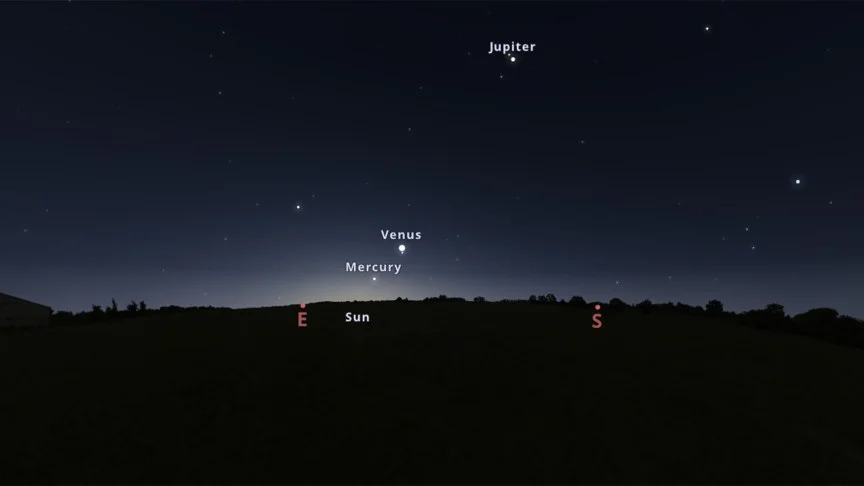
Mercury, Venus, Mars and Jupiter form a line of planets before sunrise, with the display expected to run from around Nov. 14 through about Nov. 25. The exact viewing window depends on location. Mars and Jupiter are especially close together, while Venus and Mercury complete the group nearer the eastern horizon.

Mercury is the difficult member of the lineup. The sun follows it over the eastern horizon, leaving only about 30 minutes to spot the planet before daylight takes over. Nov. 20 is the best date to try, when Mercury reaches western elongation and appears farthest from the sun in the morning sky. Even then, a clear eastern horizon matters.
Uranus is also up during this period, bringing the number of visible planets to five if you count it, but it sits elsewhere in the sky rather than joining the line. Saturn and Neptune are below the horizon during the described pre-dawn display. For observers planning a single session, the four-planet grouping is a good reason to get out before sunrise; Uranus requires a separate search.
Nov. 16–17: Leonids favor night owls
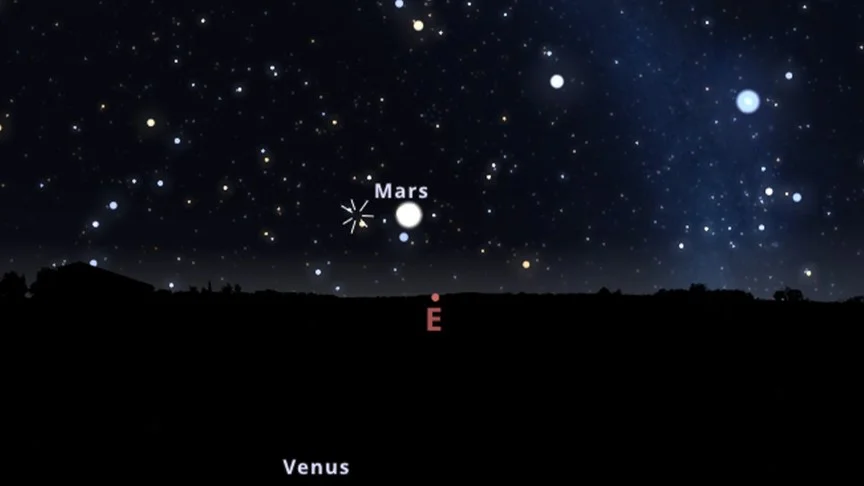
The Leonids are active from Nov. 6 through Nov. 30 and reach their peak on the night of Nov. 16 into the morning of Nov. 17. Their radiant, the point in the sky from which the meteors seem to emerge, lies in Leo near Mars and Jupiter. The planets make a useful landmark, but the meteors can streak across a broad area of sky.

The timing is less convenient: Leo doesn’t rise until around midnight, so the best opportunity comes late. Under ideal conditions, the shower can produce about 15 meteors per hour. A 41%-illuminated moon will brighten the sky and hide some of the fainter ones, so actual counts may be lower.
The Leonids have produced meteor storms with hundreds of meteors per hour in the past. Such a display isn’t expected in 2026. The possibility of stronger activity may improve after the comet associated with the shower returns around the sun in 2031, but this year’s practical expectation is a more modest peak.
Nov. 23–24: Beaver Moon supermoon
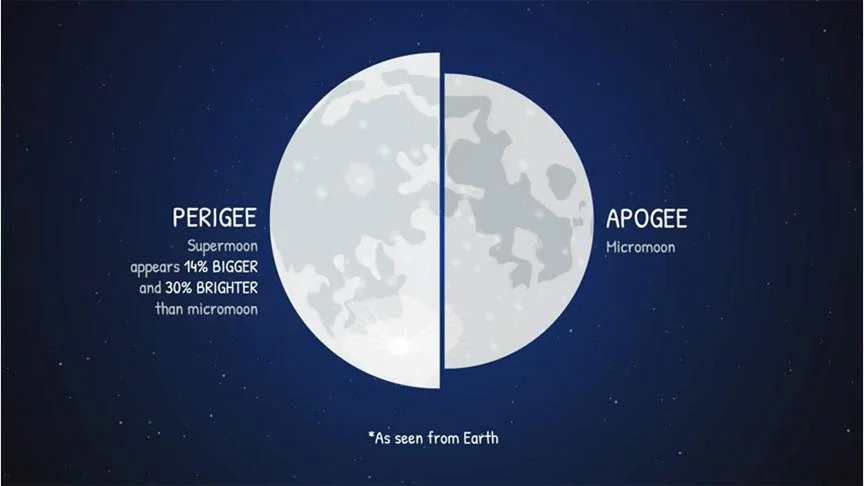
November’s Beaver Moon is the first in a run of four consecutive supermoons spanning the end of 2026 and the start of 2027. A supermoon occurs when a full moon falls within 90% of perigee, the moon’s closest point to Earth. Compared with an average full moon, it can appear about 7% larger and 14% larger than a micromoon, as well as noticeably brighter.
The moon reaches peak illumination on Nov. 24 at 9:53 a.m. ET, according to The Old Farmer’s Almanac. That’s after sunrise for most people in the US, so the best evening views should come on Nov. 23 or Nov. 24. The moon remains more than 90% full from Nov. 22 through Nov. 27. Its brightness will make those nights less suitable for spotting faint stars and meteors, but the large, bright moon is the main attraction.
Nov. 30: The month ends with another close grouping
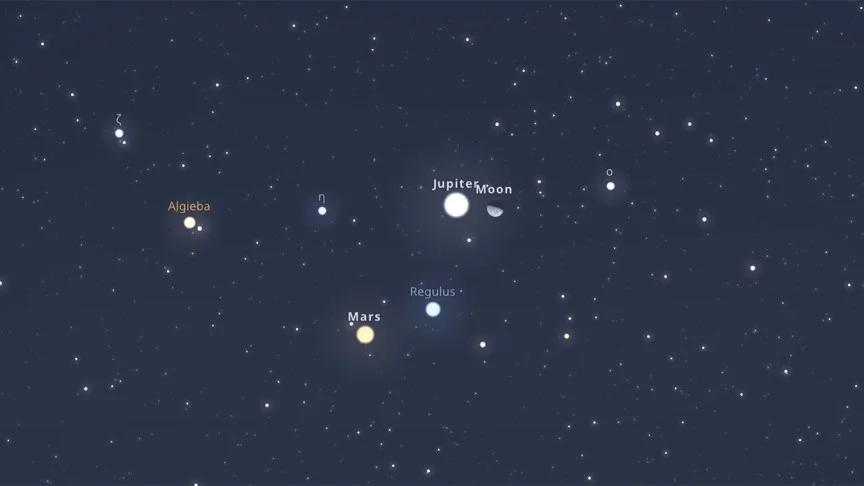
On Nov. 30, the moon returns to the neighborhood of Mars and Jupiter, with Regulus alongside them again. This time the group appears more compact than it did at the start of the month, but the arrangement lasts for just one night before the moon moves on.
All four are visible without binoculars, and the still-bright moon should make the group easy to locate. Look for Algieba nearby as well. It’s the second-brightest star in Leo after Regulus and can also be seen with the naked eye.
Constellations and star patterns all month
November’s evening sky marks the shift from summer constellations toward winter ones. Taurus, Pegasus, Capricornus, Aquila, Pisces and Aries are among the prominent patterns. The Big Dipper and Little Dipper remain visible, though people farther south may have trouble seeing them. A sky map or an app such as Stellarium can help identify each target.
There are smaller patterns to look for, too. The Pleiades, also called the Seven Sisters, is a compact star cluster in Taurus. The Great Square of Pegasus and the Circlet of Pisces offer recognizable shapes once you know where to look. The Summer Triangle remains in view, while the Winter Triangle rises earlier in the evening as the season advances.
For a flexible observing plan, use Nov. 9 for dark-sky targets, the Taurid peaks for patient meteor watching, and the pre-dawn stretch from Nov. 14 to 25 for the planet lineup. The supermoon is the month’s brightest spectacle, but its light will wash out some of the finer details elsewhere. Picking the right night for the object you want to see matters more than trying to catch everything at once.