iPhone Duo Passes 200,000 Folds in CNET’s Custom Durability Test
CNET’s Fold-a-Phone has taken Apple’s $1,999 foldable past 200,000 cycles, with no visible damage so far. Here’s how the test works.
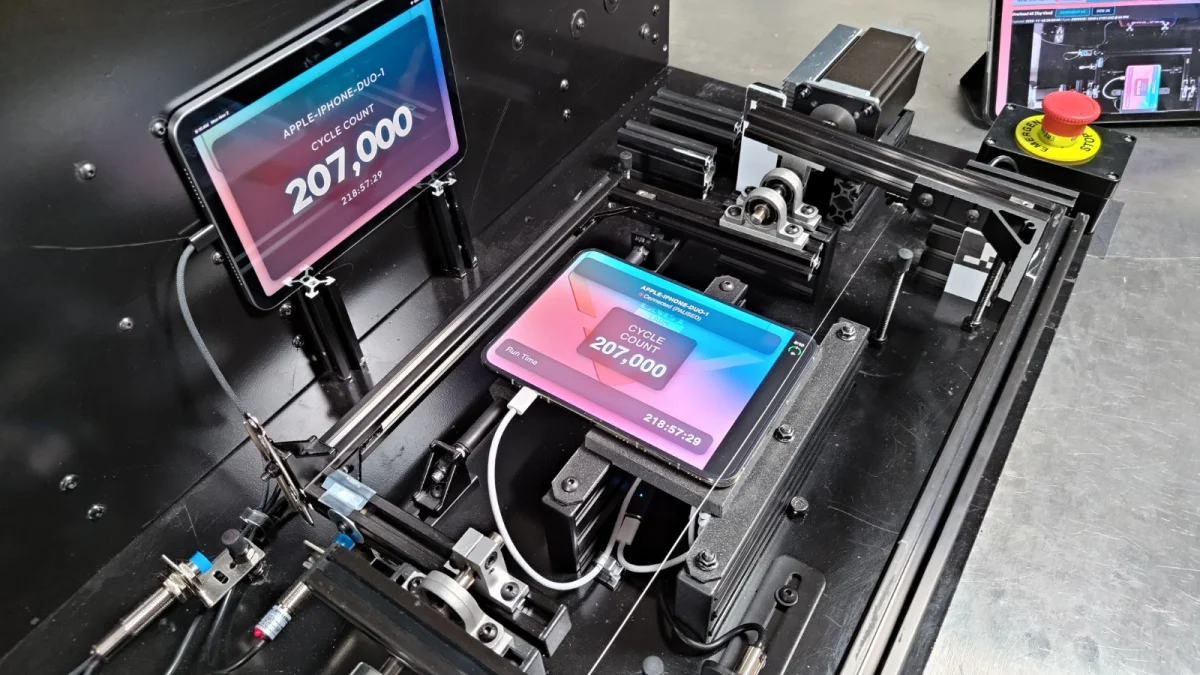
The iPhone Duo has passed 200,000 folds in CNET’s lab, giving its hinge and screens a sustained mechanical test that hand-operated checks can’t provide. The result is an early durability milestone, not a verdict on the phone’s lifespan: CNET’s machine is still running, and the device showed no visible damage when its lab director last inspected it.
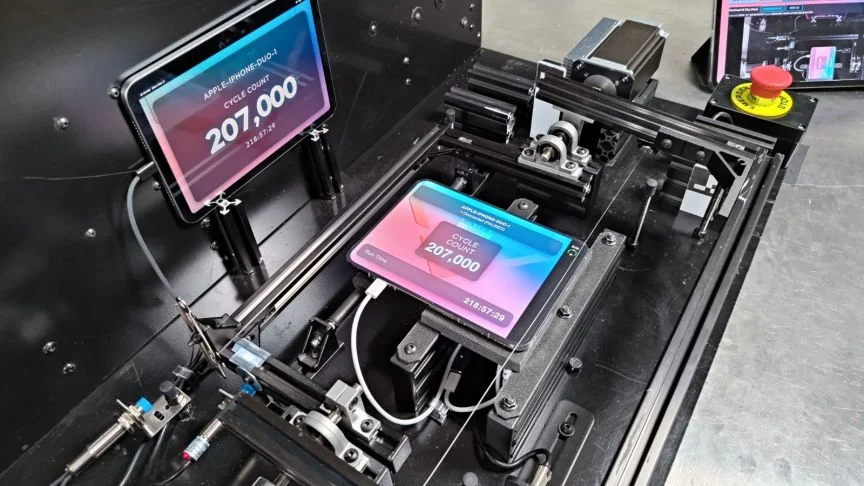
CNET bought the $1,999 foldable more than a week before reaching the milestone. By Monday, Nov. 2, the counter had passed 200,000; shortly after 8 a.m. ET, it showed 207,000. The crease looked no more visible than it did when the phone was new, according to Matthew Murray, CNET’s lab director. CNET says it will share further updates as the test continues, including through its livestream.

A repeatable test for hinges and screens
CNET built the Fold-a-Phone to test book-style and flip-style foldables, including Apple’s iPhone Duo and Samsung’s Galaxy Z Fold 8. The team spent months developing the machine and its method ahead of Apple’s entry into foldable phones. CNET has also started testing the Samsung model. The rig isn’t designed for trifold phones, whose additional fold creates a different mechanical challenge.

Many foldable phones are rated for 200,000 to 500,000 folds, according to the source. A useful test needs to account for that scale while handling devices of different sizes, dimensions and hinge orientations. CNET’s goal is to run the phone through a cycle that resembles ordinary use, rather than repeatedly folding it as fast as the equipment allows.
That choice matters because speed can add stress and heat that don’t reflect how people typically use a phone. The Fold-a-Phone takes about four seconds to complete one cycle: one second to open, one to reach the fully open position, one to close and another to return fully closed. The sequence then repeats until the hinge or screen fails.

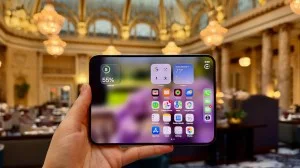
For readers following along, the result complements CNET Senior Technology Reporter Abrar Al-Heeti’s hands-on review of the iPhone Duo’s strengths and weaknesses. A machine can apply a consistent motion and collect data over time; everyday use reveals how the device feels and performs in a person’s hands. Together, those approaches offer different evidence about durability and usability.

How the Fold-a-Phone works
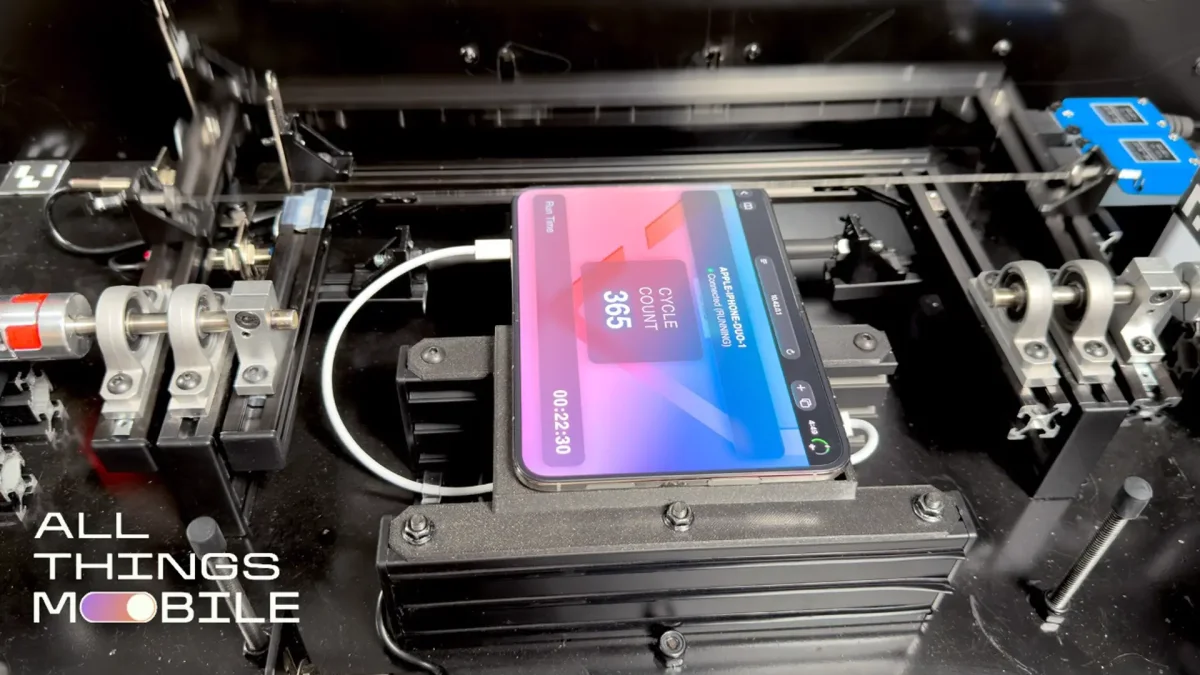
The rig uses two armatures, each driven by an industrial-grade stepper motor. Software on a connected computer controls the motors’ torque as they move the phone through each part of the cycle. The team built the machine from standard components, and proximity sensors monitor armature position. If a sensor doesn’t detect the expected position, the rig stops.
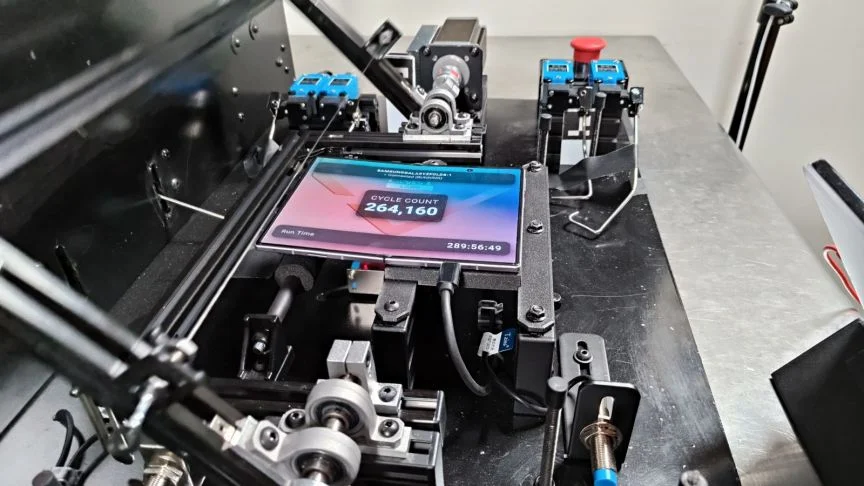
Motor power use provides another signal: changes over time may show that the phone is becoming harder to open or close. Cameras record the test from several angles, while the computer produces regular status updates for later review. The setup also connects to an EcoFlow Delta 3 Plus power station to keep the test running through an outage, and the data is saved in multiple locations.
Each phone sits in a custom 3D-printed sled matched to its dimensions. CNET uses its Prusa Core One printer to make the fixture, secures the phone to it with heavy-duty double-sided tape, and screws the sled to the machine. That setup lets the team adapt the rig to different devices while keeping each one fixed during repeated cycles.
What the fold count can tell us
A fold count is useful only when the method is clear. Repeated manual folding can reveal obvious damage, but it’s hard to maintain a consistent pace or force. The Fold-a-Phone gives CNET a repeatable cycle and records how the motors behave, making it possible to track changes alongside visible wear. Even so, this test doesn’t reproduce every condition a phone encounters in daily life, and the source doesn’t provide a direct estimate of how many years 200,000 cycles might represent for a particular owner.
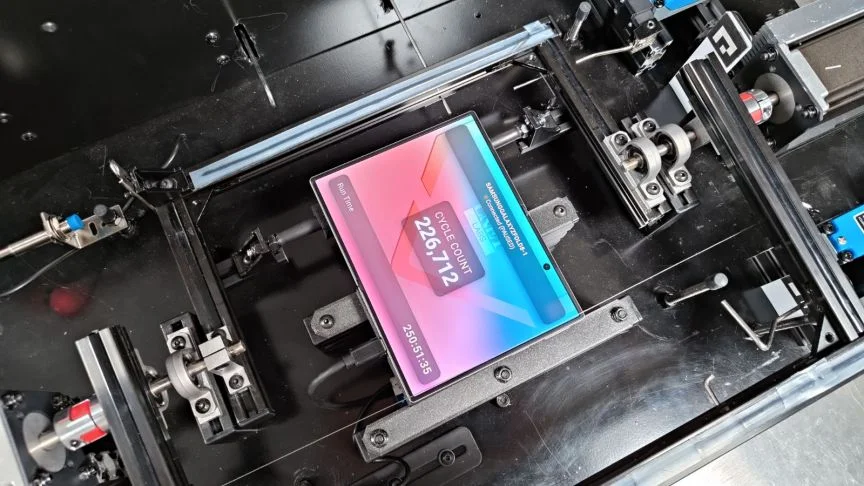
The earlier Galaxy Note 8 test offers a point of comparison: that phone passed 260,000 folds before CNET swapped it out for the iPhone Duo. It’s a useful reference for the rig’s history, but it doesn’t establish how the two phones compare under identical conditions or how either result maps to long-term ownership.
Apple hasn’t shared a public fold-life figure for the Duo, leaving independent testing to add evidence. CNET says its data will support status updates and comparisons with competing models. The company’s arrival also brings new attention to a product category where Samsung began selling its first Galaxy Fold in the US in September 2019, while Motorola and other makers have explored designs ranging from flip phones to trifold concepts.
The Fold-a-Phone’s current scope has limits: it doesn’t handle trifolds, and the team is still working to make it run more quietly and smoothly without changing the cycle. For now, the practical signal is that the Duo has crossed 200,000 measured folds without visible damage reported by CNET. The next useful evidence will come from whether the machine detects changes in hinge movement, screen condition or motor power as the count climbs.