Anthropic Adds Claude Code Prompt Guard Against Video Game Clones
A small Claude Code prompt change steers users away from copying specific games while leaving room for original designs and genre inspired projects.
Anthropic has added two sentences to Claude Code’s prompt for Opus 5.5, instructing it to avoid recreating a specific existing video game. The change targets direct copies while preserving requests for original games, broad genre concepts and projects built with a user’s own designs and assets. It’s a narrow adjustment to how the model responds, but it puts a practical boundary around a tool that can turn plain language into playable software.

Anthropic engineering leader Addy Osmani described the change in a post on X dated October 30, 2026. He said the prompt steers Claude away from making another developer’s specific game because using the tool to infringe intellectual property goes against the company’s usage policy. Osmani also said Anthropic would keep adjusting the balance and offered to review cases where developers think Claude has refused a request incorrectly. His post is available on X.
The adjustment matters because prompt-based coding has lowered the effort required to make a basic game. A user can describe a familiar format and get a playable result quickly, even without much coding or visual design experience. That speed is useful for experiments and prototypes. It also makes it easier to ask for a close recreation of a particular game, which is where the boundary between borrowing a broad idea and copying distinctive creative work becomes harder to manage.

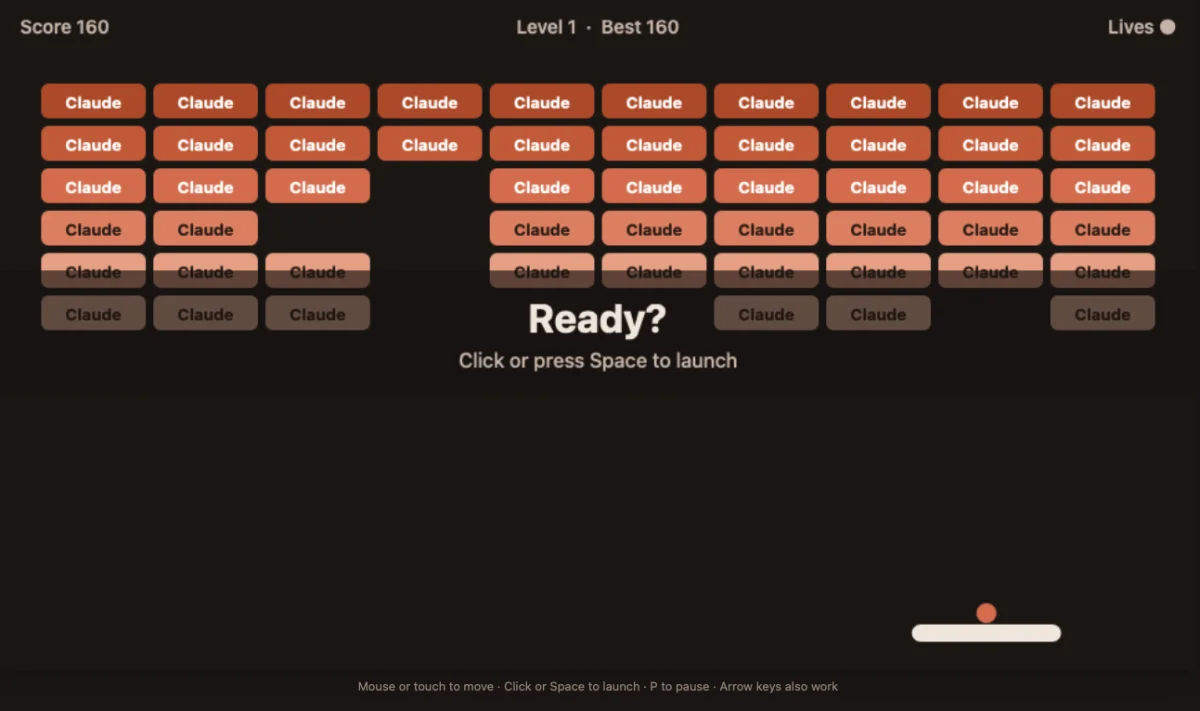
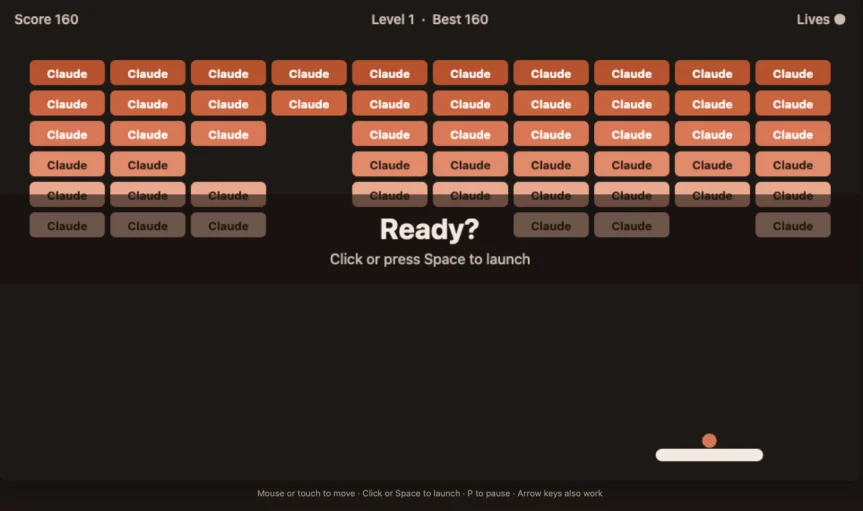
Anthropic’s change doesn’t appear to block games that share general mechanics with popular titles. A CNET request for a game resembling Breakout, with Claude’s name on each brick, produced a playable browser version that remained distinct from the original. That example illustrates the intended distinction: a familiar premise can guide a new design without reproducing the specific presentation and creative details of an existing game.
Where inspiration ends and copying begins
The distinction predates generative AI. David Kocan, an intellectual property lawyer at Nixon Peabody who co-leads the firm’s esports and gaming team, explained that protection generally covers a game’s original creative expression, while broad concepts, rules and gameplay mechanics usually remain available for others to use. A side-scrolling platform game or a battle royale format can inspire many titles; the genre itself isn’t the same as the particular art, characters, presentation and other expressive choices made for one game.
That boundary can still be difficult to judge. Games combine functional systems with creative elements, and a new work may resemble an older one in some ways without copying its distinctive expression. Kocan noted that the difference between borrowing an idea and copying creative work can be blurry in practice, especially when both games rely on similar mechanics.
The scale and speed of AI generated work add pressure to that judgment. RTB Ruhan, founder and CEO of animation and game art studio Null Station, said tools can make it fast and inexpensive for people without art or design skills to reproduce a popular game. But the fact that a model generated the result doesn’t, by itself, make the result safe to publish or sell.

Ruhan described a straightforward comparison: remove the title and logo, then ask whether players could still distinguish the two games. If they can’t, he said, the new work may have crossed the line. That’s a useful warning sign for creators, though it doesn’t settle every case; Kocan’s account makes clear that similarities need to be considered in context.
Why the prompt change matters
Anthropic’s decision also reflects a product risk for AI providers. Eric Blatt, a corporate, securities and intellectual property lawyer at Scale and a former examiner at the US Patent and Trademark Office, said there’s a plausible argument that a company could be implicated if its software, running on its servers, receives a request to copy a game and then produces the copy. He pointed to chat records as material that could matter in a dispute.
Blatt said legal cases have not kept pace with the growth of AI tools, and he expects disputes could follow if an AI generated recreation directly threatens a company’s business. The source of the content may therefore matter less to a creator than the result and the process that produced it. A prompt guard can reduce the chance that the model helps make an obvious copy, though it cannot resolve the larger questions about what counts as permissible similarity.
There’s no requirement described here that AI companies block game cloning. The decision to add a guardrail is a product choice shaped by how Anthropic interprets its own usage rules and the risks of serving a request. Kocan’s point is that a company’s internal boundary may be more cautious than the boundary a court would ultimately apply.
For developers, the practical takeaway is to use Claude for new concepts, broad genre experiments and work built from their own assets, while avoiding prompts that name a particular game as a template for a near copy. Anthropic says it will keep refining the behavior, and Osmani has left a channel for reporting refusals that seem mistaken. How well the change separates legitimate inspiration from close imitation will depend on the requests users make and how consistently Claude handles the gray areas.
Osmani said Anthropic added two sentences to Claude Code’s prompt on Opus 5.5 to steer it away from recreating another creator’s specific game. He said original games, genre games and projects using a user’s own designs and assets are meant to remain available.
— Addy Osmani (@addyosmani) October 30, 2026


