SparkFun Adds BMI330 and BMA456 Qwiic Motion Sensor Breakouts
The new BMI330 and BMA456 boards add on-chip motion features and low-power sensing, while BMI270 and BMA400 breakouts get price cuts.

SparkFun’s new Qwiic breakouts put two Bosch Sensortec motion sensors on small boards aimed at different project needs: the BMI330 combines acceleration and angular-rate sensing with on-chip motion functions, while the BMA456 focuses on three-axis acceleration and low-power activity detection. The practical difference is how much work each sensor can handle before a microcontroller needs to respond.
Both boards use Qwiic connectors, so they can be wired into compatible projects without soldering to the sensor connections. That lowers the friction of prototyping, though teams still need to account for the software and configuration work required to read measurements and tune motion detection for their application.
On-chip motion handling with the BMI330
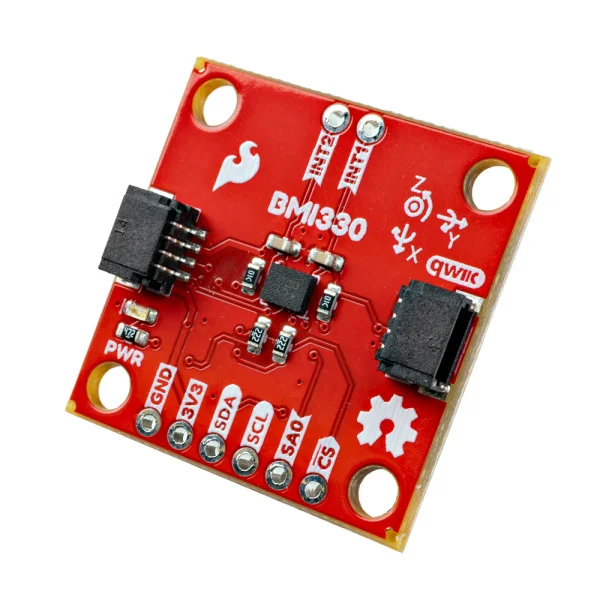
The BMI330 board measures acceleration and angular rate with a 16-bit, six-degree-of-freedom inertial measurement unit. Its on-chip interrupt engine can detect motion-related events, and the product description cites step counting and tap detection as tasks the sensor can handle internally. That can reduce how often a host processor needs to inspect raw measurements, which may help a design manage power and leave processor time for other work.
SparkFun lists the BMI330 breakout at 1 inch by 1 inch and $19.95. The sensor is specified to operate at temperatures up to 105°C, a detail that may matter in equipment exposed to heat. The source describes the board as suited to harsh environments, but gives no additional environmental ratings, so designers should check the sensor and board documentation before relying on it in a particular setting.
See the SparkFun 6DoF IMU Breakout - BMI330 (Qwiic).
Low-power three-axis sensing with the BMA456
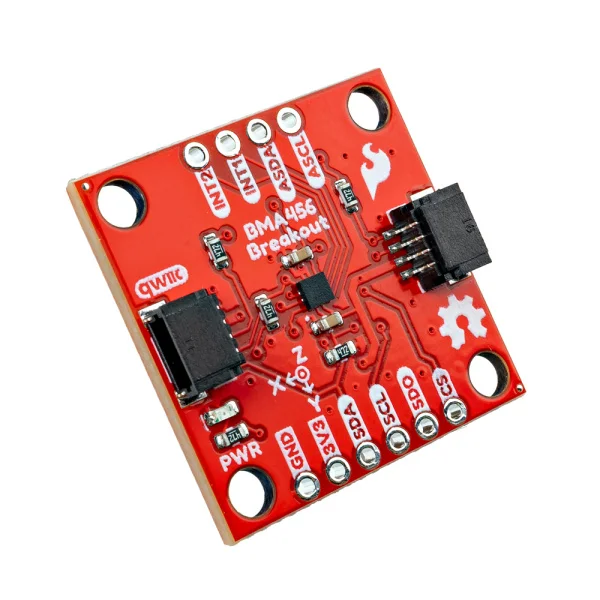
The BMA456 breakout measures acceleration along three axes and detects motion events. SparkFun gives a low-power-mode current figure of 14µA and points to wrist tilt, taps and double taps as relevant detection features for wearable devices. That makes the board a candidate for battery-powered projects that need to watch for movement over time, such as a wearable or fitness tracker.
Low current draw can help extend runtime, but it doesn’t settle the power budget on its own. The total depends on the rest of the design, including how the sensor is configured and how often the host reads data. The source doesn’t provide a battery-life estimate or a comparison with the BMI330, so those questions will need to be answered through the sensor documentation and project testing.
The listed price is $15.95. SparkFun describes the BMA456 as a high-precision sensor, but provides no measurement-error figures in the source. For applications where accuracy matters, buyers will want to check the component documentation and confirm that its performance fits their requirements.
See the SparkFun Triple Axis Accelerometer Breakout - BMA456 (Qwiic).
Price cuts on BMI270 and BMA400 boards
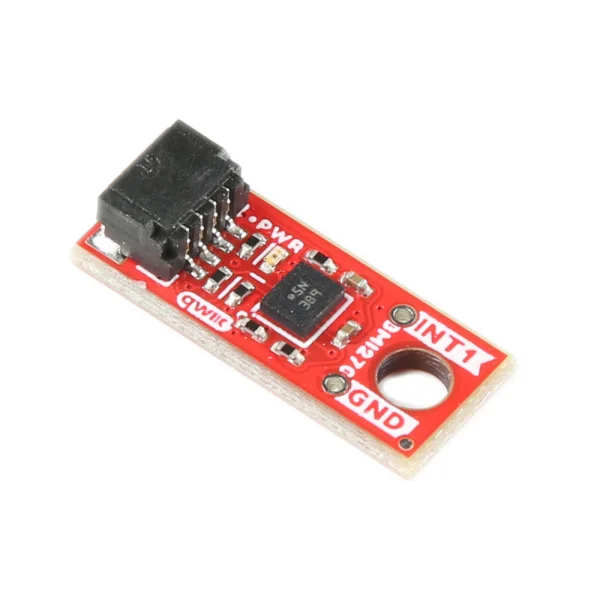
SparkFun also lowered the prices of its existing BMI270 and BMA400 Qwiic breakouts. The BMI270 boards combine acceleration and angular-rate measurement with on-chip motion-triggered interrupts. They’re available in a standard 1-inch-by-1-inch format and a micro board measuring 0.75 inch by 0.3 inch.
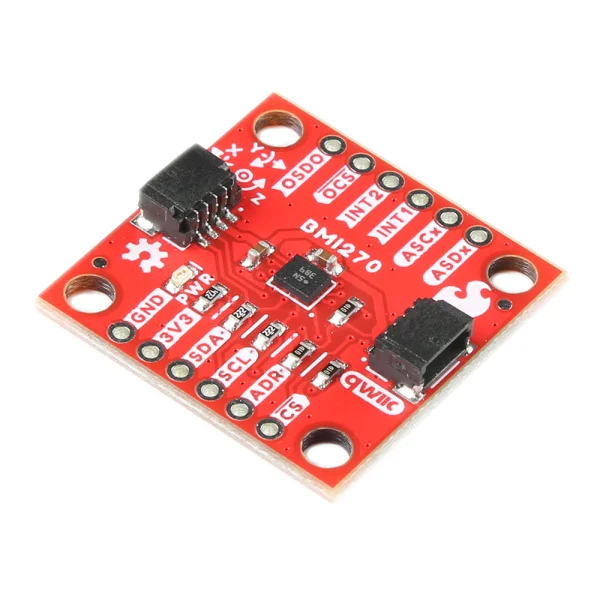
The standard BMI270 breakout now costs $14.95, down from $18.50. The micro version is $15.50, compared with its previous $17.58 price.
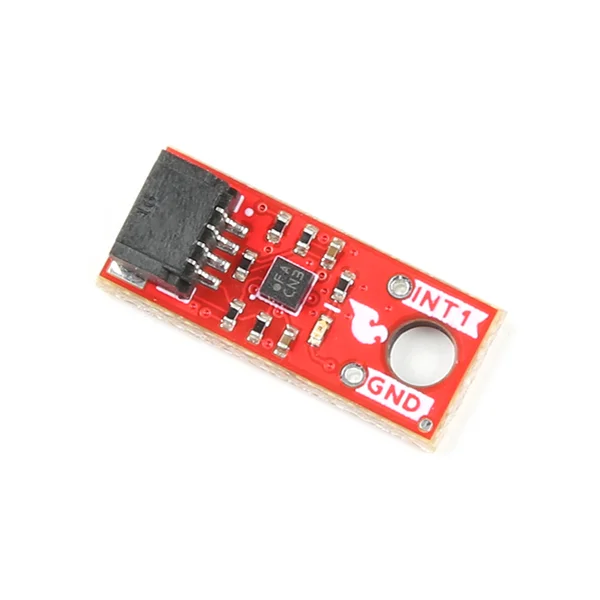
For three-axis acceleration sensing, the BMA400 boards are offered in the same two listed sizes: standard and micro. SparkFun describes the sensor as designed for ultra-low-power use and says it can distinguish important situations from false signals, a useful capability in applications where unnecessary alerts could be disruptive. The source doesn’t specify which events it can distinguish or how detection performance varies by configuration.
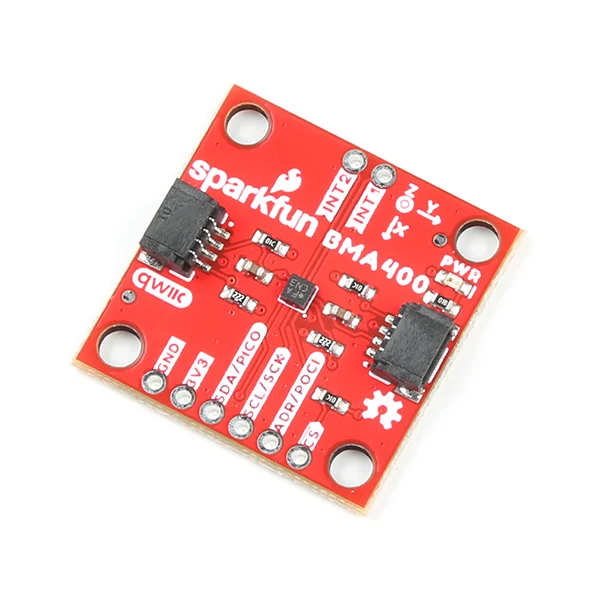
The standard BMA400 breakout is now $8.95, down from $10.50. Its micro version is $9.50, also reduced from $10.50.
These price changes give builders more options across size, sensor type and onboard motion functions. The BMI330 stands out for combining six-axis measurements with internal event handling; the BMA456’s stated low-power mode points toward wearable designs; and the discounted BMI270 and BMA400 boards offer established alternatives at lower listed prices. The next practical step is to compare supported features and configuration details against the project’s power, space and detection needs.
Other items and seasonal offers
SparkFun also highlighted its November Deals page, with a 30% discount on select sensors beginning November 2. The source doesn’t identify which sensors are included, so the offer page has the details: November Deals.

A separate deal image features the Artech Digital Multimeter A5020. The source doesn’t provide its price or other product specifications.

SparkFun invites customers to share projects through @sparkfun, Instagram, Facebook and LinkedIn. The product and pricing details give builders a starting point; sensor documentation will determine whether each board’s detection options and operating limits match the finished design.