How European City Trees Shaped the Streets in Art
Paintings from Paris, London, Berlin and Amsterdam show how trees became part of city life—and how some streets have changed around them.
Trees give city streets a history that buildings and traffic alone can’t show. In paintings from Paris, London, Berlin and Amsterdam, they appear as planted features of redesigned avenues, markers of a neighborhood’s character and survivors of streets that later changed around them. The works also record a practical tension familiar to city dwellers: trees share limited space with homes, shops, carriages and, eventually, motor traffic.
Many early European towns were densely built, with buildings on opposite sides of a street sometimes close enough for people in upper rooms to reach across. Wider avenues and tree-lined boulevards reflected a different idea of urban life. Affluent residents who built town houses brought something of the country estate into the city, while street trees softened the hard lines of stone and paving. The paintings here show that this urban planting became part of how people saw and remembered their cities.
Paris: trees in the flow of a modern boulevard

Camille Pissarro’s Boulevard Montmartre, Spring Morning (1897) makes the street itself the subject. Buildings, pedestrians and carriages compete for attention, with London plane trees lining the boulevard among them. Their placement shows how street planting had become part of the design of a busy Paris thoroughfare, rather than a feature reserved for gardens.
Late in his career, chronic eye problems led Pissarro to paint mostly from indoors, including in Rouen and Paris. That vantage point suited a city scene: it let him observe the changing patterns of movement below while holding the street’s architecture and trees in view. The result captures a place shaped by both planned redevelopment and everyday traffic.
London: trees that outlast their surroundings

Alice Maud Fanner’s view of Hyde Park, painted around 1900, catches London plane trees in winter, their bare branches set against a clear day. The figures appear lightly dressed for the season, adding a small ambiguity to the scene. Even without leaves, the trees define the park’s edge and give the view its structure.
The London plane is thought to be a hybrid of the oriental plane and American buttonwood, originating in Spain or southern France around 1650 before reaching southern England. It became widely planted in London and a signature of the city’s streets. Some specimens have lived for more than three centuries and grown above 40 metres (130 feet). That longevity helps explain why the species features so strongly in depictions of urban London: it can remain in place through changes in transport, buildings and street use.

Spencer Gore turned to a more intimate subject in The Fig Tree, part of a series depicting the same tree under different seasonal and lighting conditions. A fig in a London garden sits at a smaller scale than the plane trees of the boulevard, but the contrast matters: urban trees weren’t limited to formal public avenues. Private gardens also held species that brought distinct shapes and seasonal changes into the city.

Gore’s Houghton Place (1912) records houses beside Ampthill Square in Camden Town. The houses and square were demolished in 1968 and replaced by apartment blocks, though some of the trees remained. That detail gives the painting a second timescale: buildings can disappear within decades, while trees may persist long enough to connect a changed neighborhood to its earlier form.
Berlin: changing traffic, familiar trees
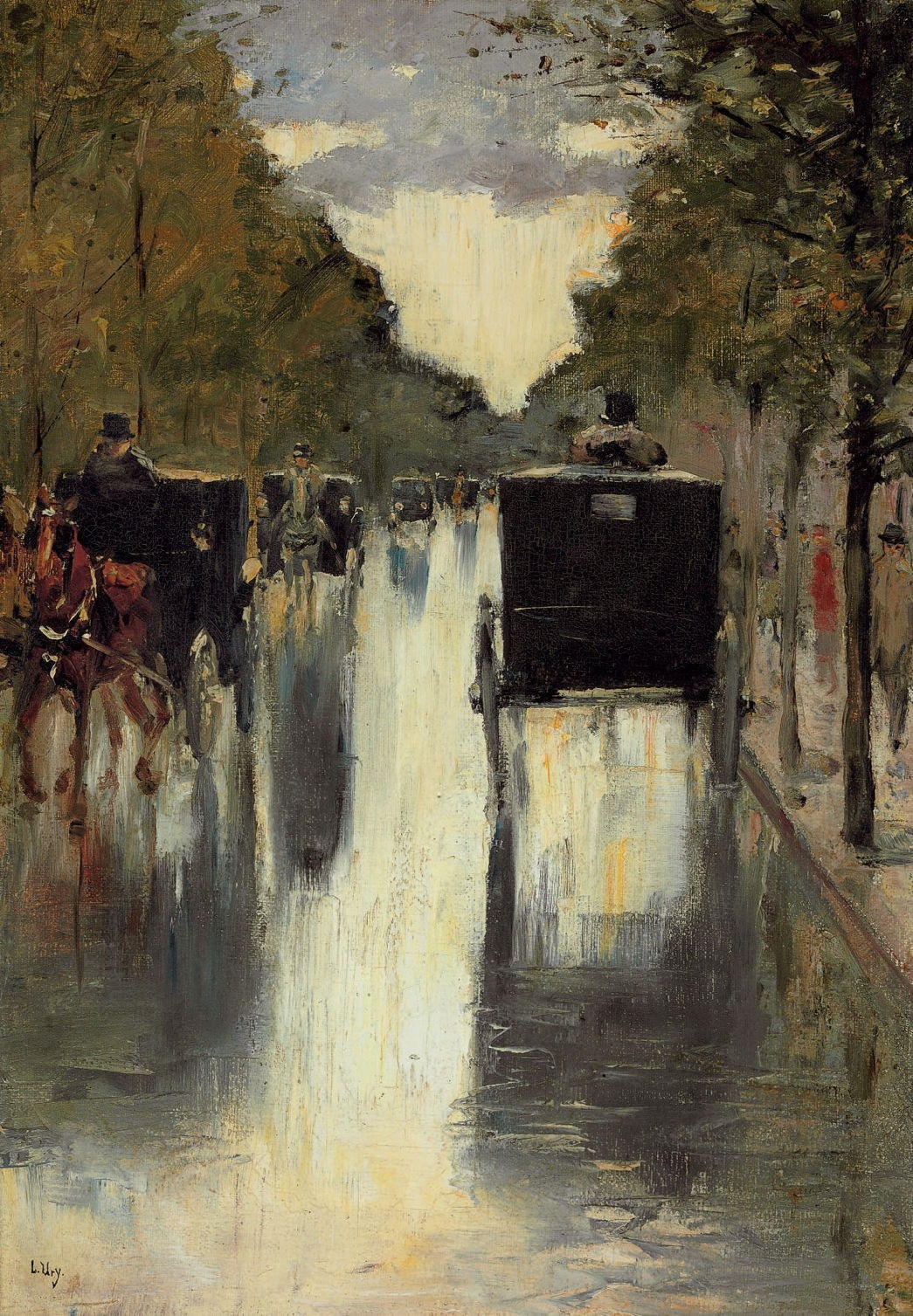
Lesser Ury’s Berlin Street Scene with Horse-Drawn Cabs, painted between 1900 and 1910, gives the trees enough detail to make them part of the street’s identity. The cabs show the transport of the period; the trees provide a steadier frame around the movement.
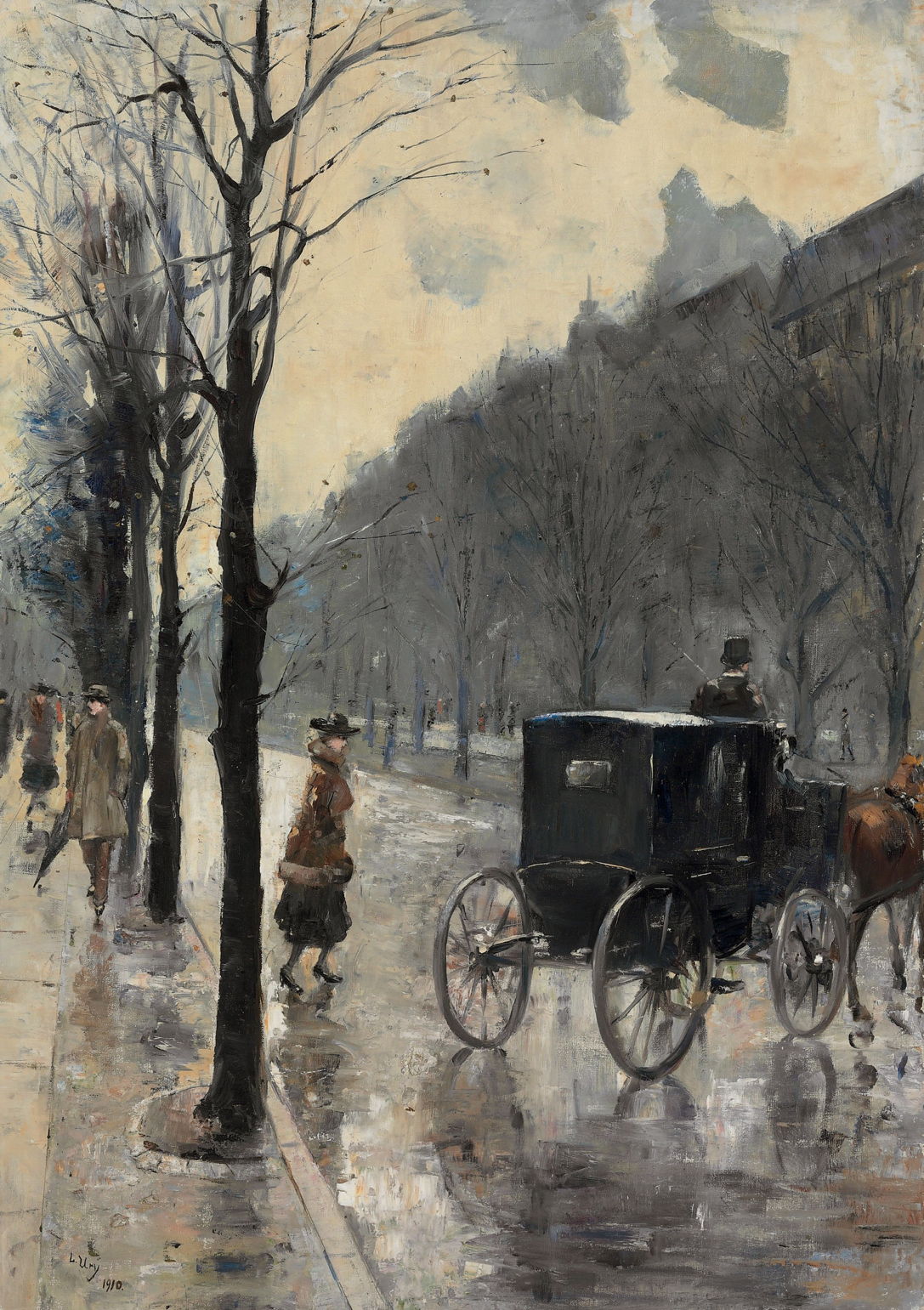
On Kurfürstendamm in 1910, Ury depicts a wet winter day on one of Berlin’s best-known shopping avenues, west of the Tiergarten. The street is unusually quiet: one horse-drawn carriage appears, while motor taxis are absent. The trees are probably London planes, suggesting that the species had become familiar beyond the city after which it was named.
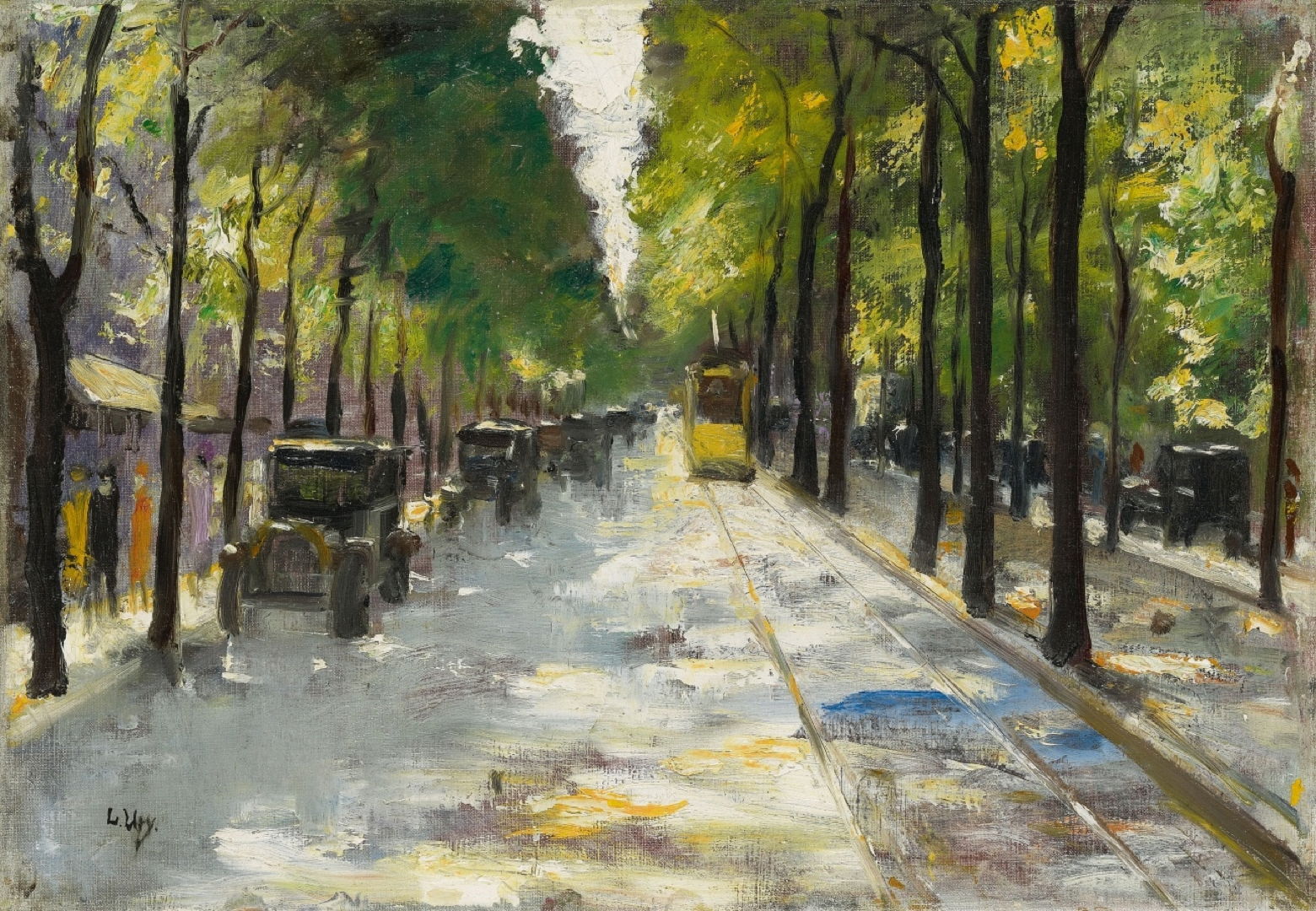
By the 1920s, Ury’s Berlin Street in Sunshine shows motor taxis and trams dominating the street. The trees remain. Across the two decades represented in these scenes, the city’s transport shifts, but its planted framework still anchors the view. That’s a useful reminder that street trees are infrastructure with a longer life than the vehicles passing beneath them.
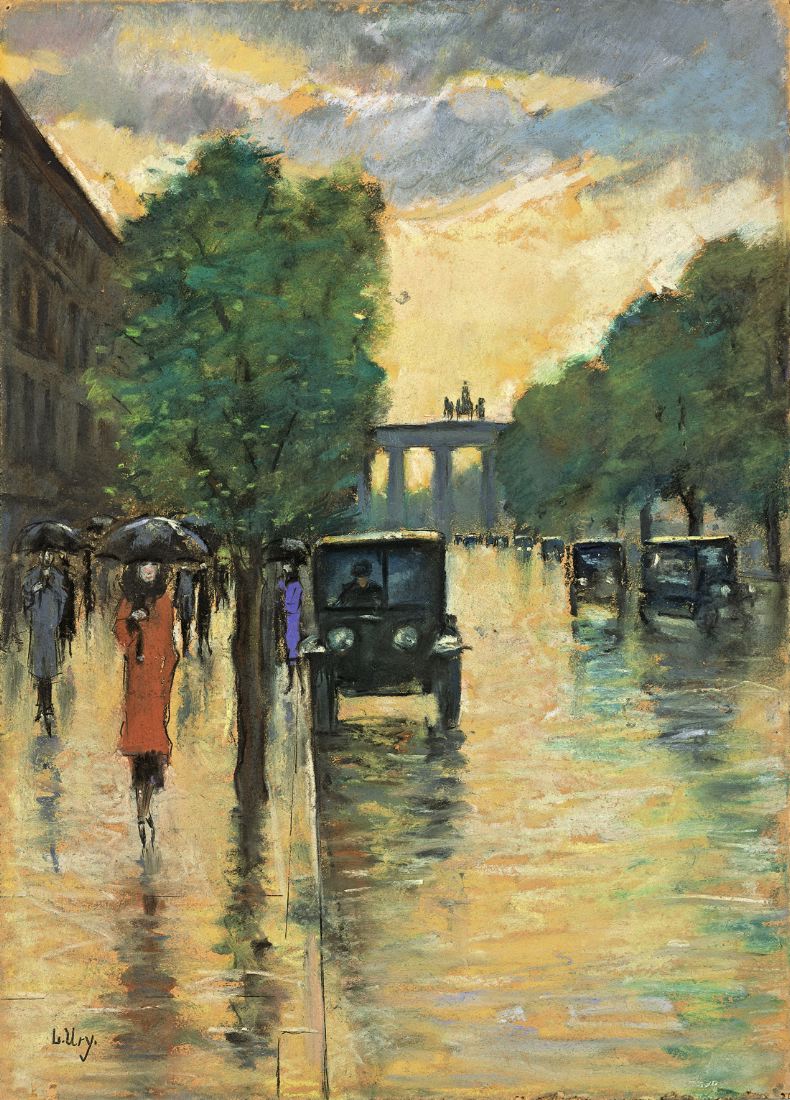
Ury’s pastel of Unter den Linden with View of The Brandenburger Gate looks west toward the edge of the Tiergarten. The street’s name refers to its linden, or lime, trees: small-leaved limes (Tilia cordata). Their wood is soft and easy to carve, making it useful for woodcarving across many centuries. Here, their role is also visual and civic: they give a well-known avenue a name that remains tied to its trees.
Amsterdam: a tree line across centuries
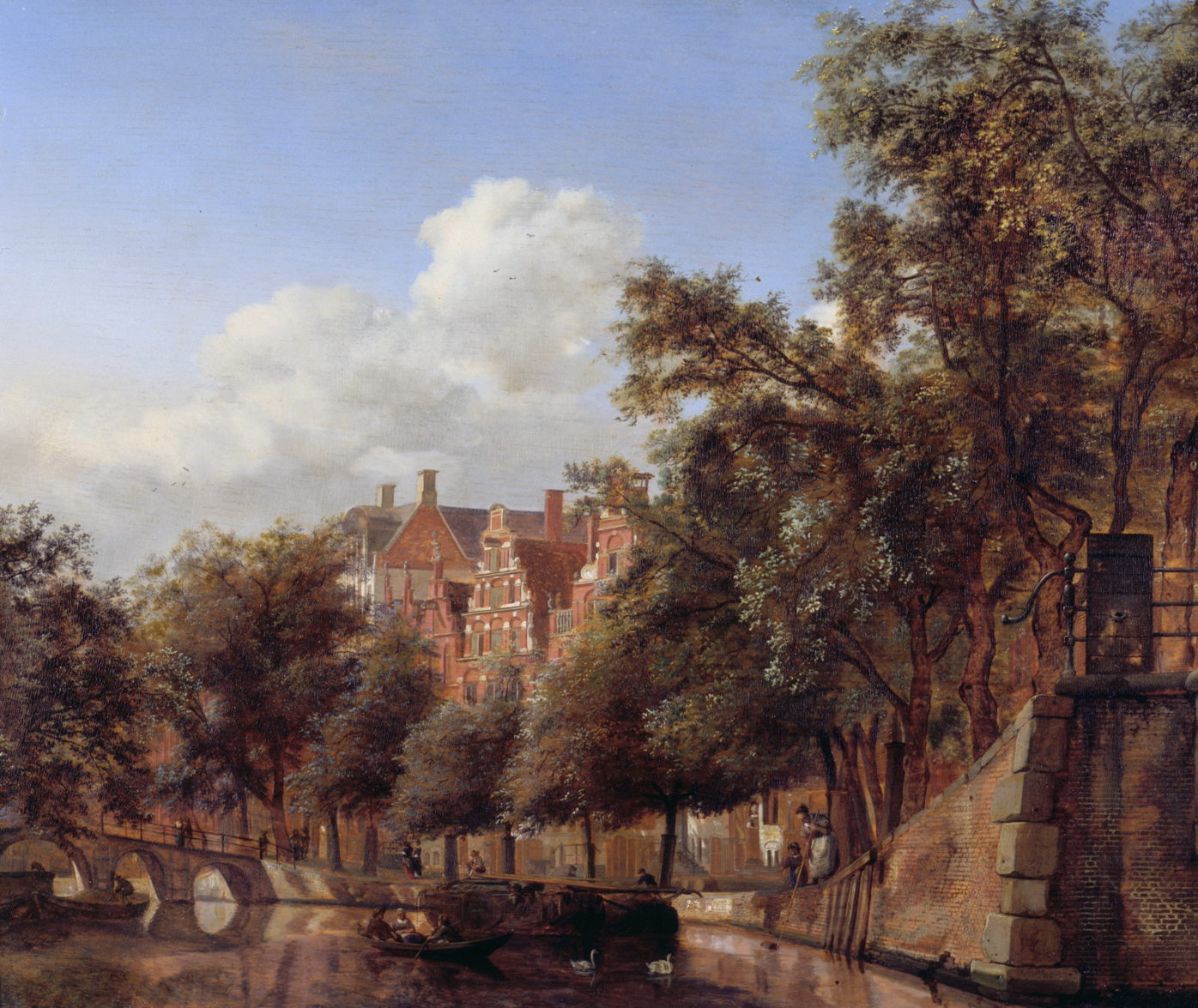
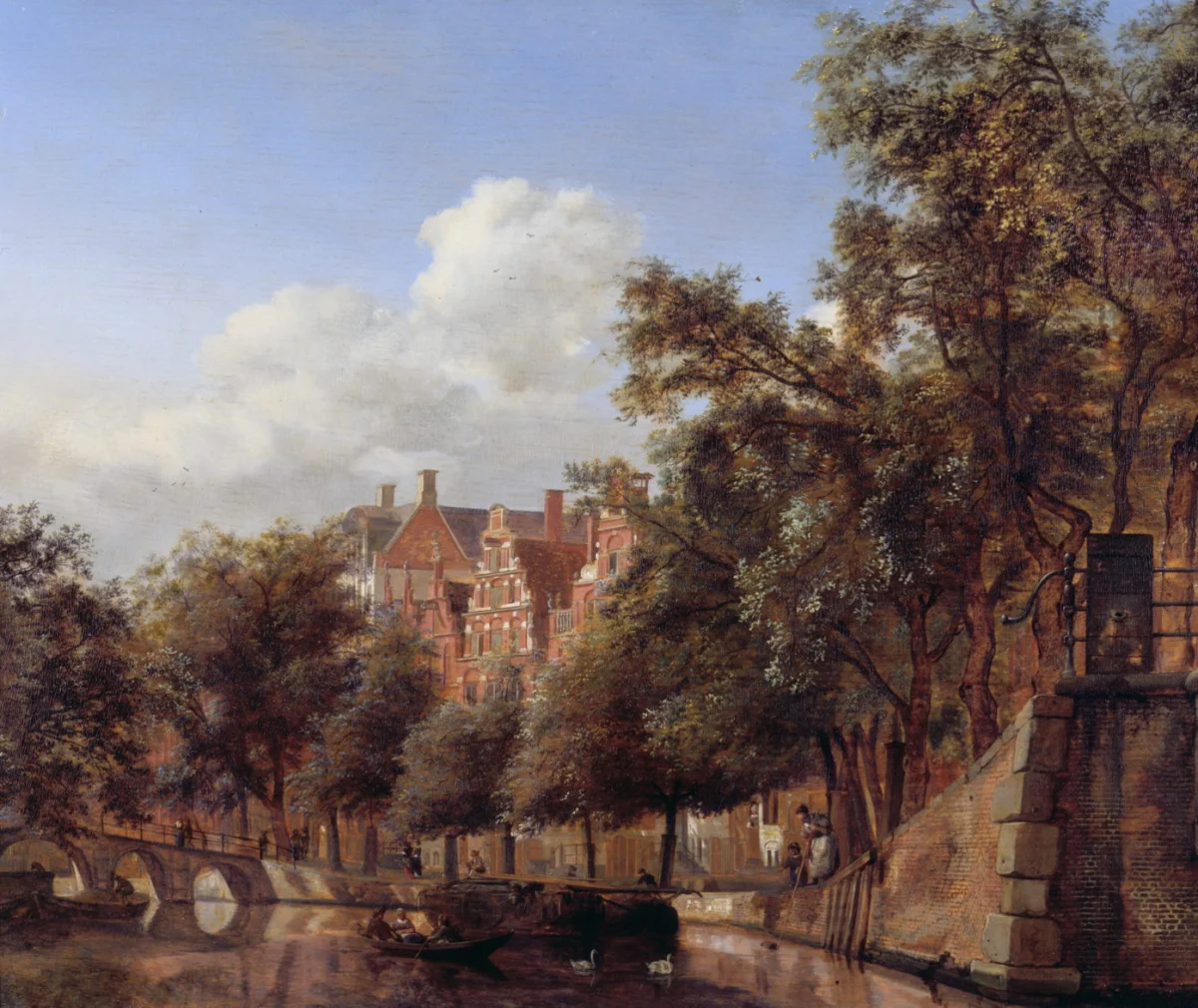
Jan van der Heyden’s View of the Herengracht, Amsterdam, painted around 1670, shows elegant houses along a canal built from 1612 onward. This stretch, known as the Golden Bend, was already defined by the relationship between architecture, water and trees. The trees are probably Dutch elms, a family later hit hard across Europe by Dutch Elm Disease, which has caused many elm deaths since 1966.

Thomas Fearnley’s view of a procession in Amsterdam on 27 November 1840 offers a later look at the canal. The trees on either side may be the same elms seen in van der Heyden’s painting, though their appearance has changed. Across these works, the species can’t always be identified with certainty, but the broader pattern is clear: city trees record the design choices, transport shifts and neighborhood changes that paintings preserve long after the street itself has been rebuilt.