Albin Egger-Lienz’s Early Paintings Trace a Shift from Naturalism to a Looser Style
Religious scenes, Tyrolean life and changing influences shaped Egger-Lienz’s early work, from detailed realism to simpler forms and earth colors.
Albin Egger-Lienz’s early paintings move between close observation and scenes shaped by memory, faith and Tyrolean history. That range helps explain why he mattered to his contemporaries: his work combined the detailed realism popular in Europe with a growing interest in rural subjects and simpler forms. He was regarded in his day as an important artist, on a level with Gustav Klimt, though he remains less familiar outside Austria.
Born near Lienz in the Austrian Tyrol, Egger-Lienz was the son of a local church painter and photographer and a farmer’s daughter. His birth name was Ingenuin Albuin Troja. His father introduced him to drawing and painting before he received formal instruction from other artists. In 1884, he began studying at the Academy of Fine Arts in Munich, where he stayed until his marriage in 1899. He then moved to Vienna, joined the conservative Künstlerhaus rather than the recently formed Secession, and continued to spend long periods in the Tyrol, especially in Ötztal.
Learning to observe
Religious subjects appear often in his surviving early work. Saint Sebastian, painted in Munich in 1887, treats the familiar martyrdom in a dark, restrained way. The approach favors careful observation over dramatic effect, an early sign of his interest in presenting figures and settings with a directness associated with Naturalism.

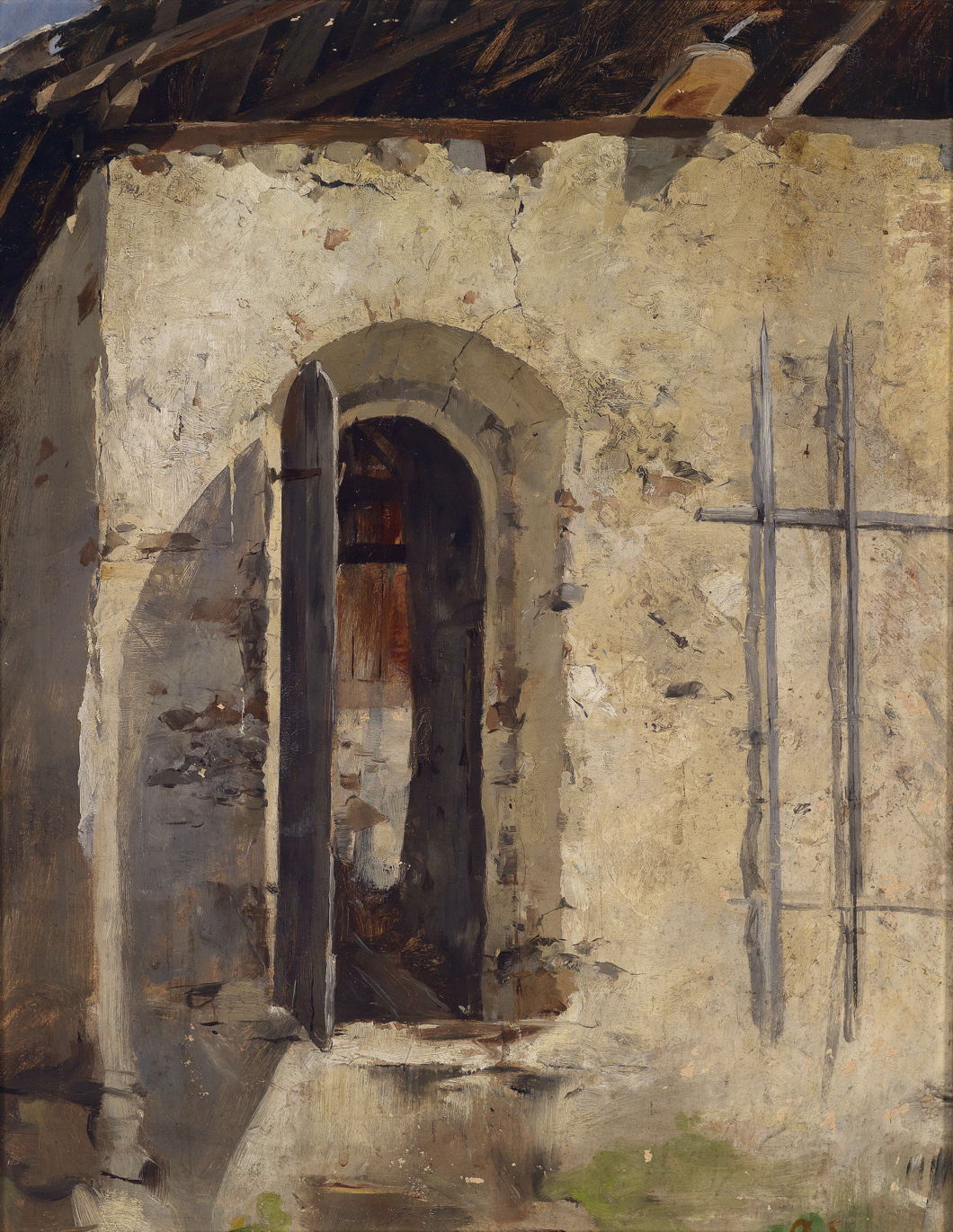
Though based in Munich, Egger-Lienz returned to the Tyrol most summers. The Gate, made around 1890, depicts the entrance to a grainstore at Tammerburg, an old castle in Lienz. Painted on cardboard, it looks as if it may have been begun in front of the subject, although there is no known record confirming that he painted outdoors. The modest scale and unembellished view bring the local setting into focus.
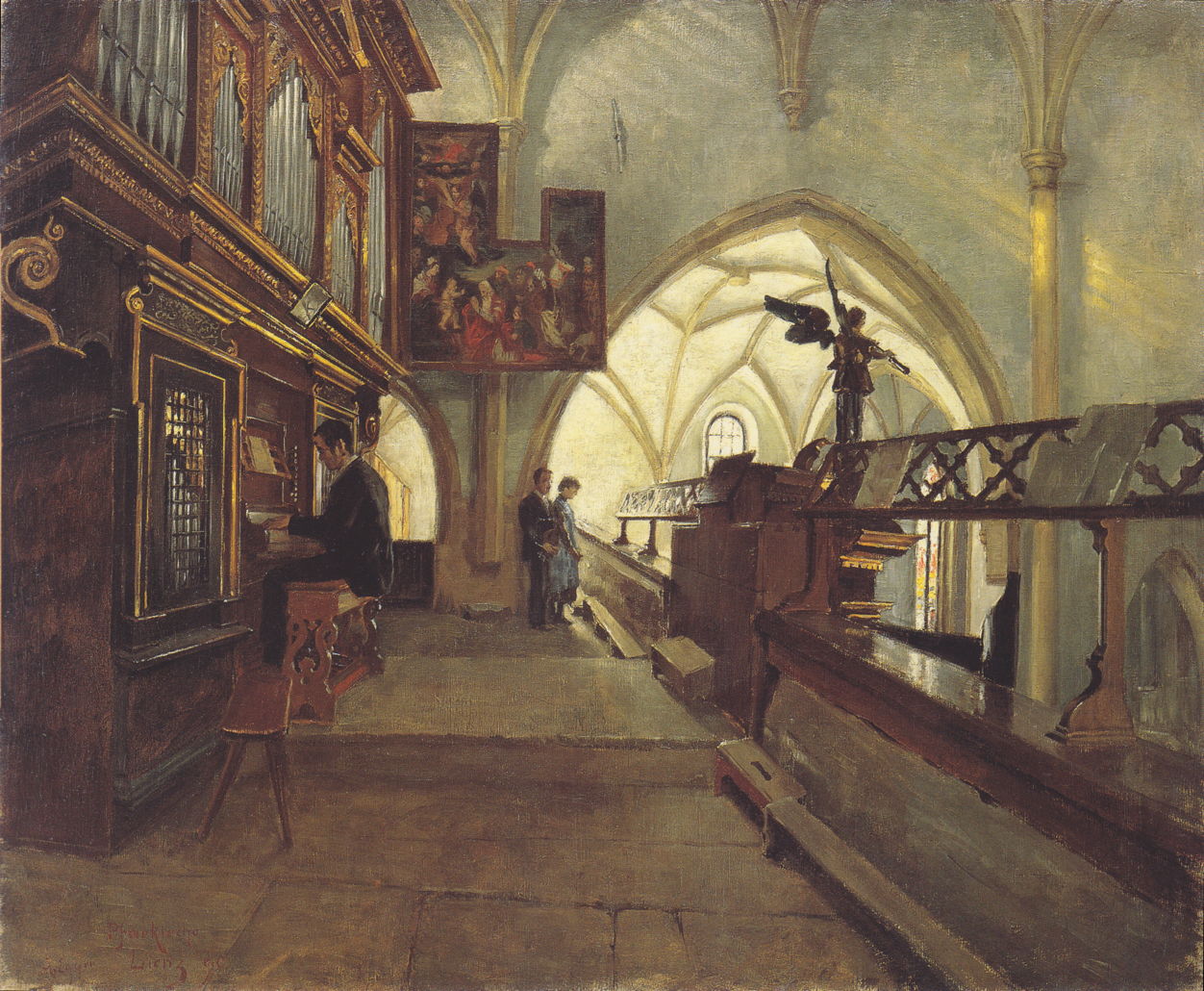
His Church Choir of Lienz Parish Church of St Andrä (1890) takes a more ambitious approach. The strong perspective and precise detail recall Henry Lerolle’s large painting The Organ Rehearsal, shown in Paris in 1885, though a direct influence is uncertain. The composition’s carefully observed interior fits the Naturalist style then gaining popularity across Europe.
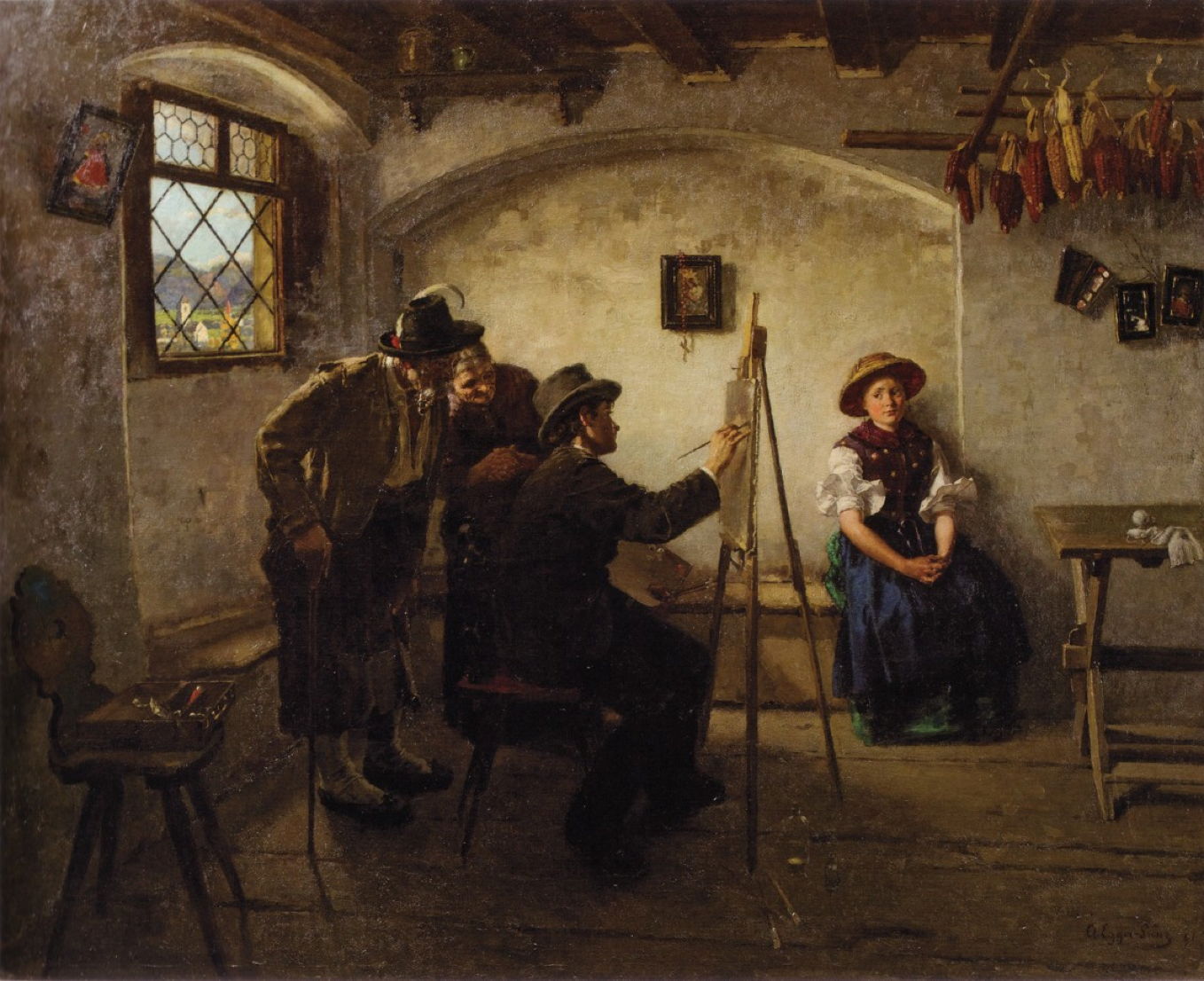
Farm in Grafendorf, also dated 1890, looks at rural work without softening its setting. A young woman churns butter on a stone platform inside a dilapidated barn in Styria. In The Portrait Painter in the Countryside (1891), a seated young woman faces a painter. The artist may have depicted himself at work, but that identification is speculative; a view through the window suggests a setting in the Tyrol or Bavaria.

Tyrolean memory and conflict
Local history enters A Farewell in the Tyrol in 1809, painted between 1894 and 1897. An elderly man kneels beside a grave, apparently mourning his wife. He clasps his hands in prayer and leans on a locally made shotgun. The year in the title points to a period of upheaval: after Napoleon’s forces reoccupied Vienna and Austria lost at Wagram, much of the Tyrol was incorporated into the Illyrian Provinces. Popular uprisings followed. Egger-Lienz turns that history into a quiet scene of personal grief rather than a battle image.

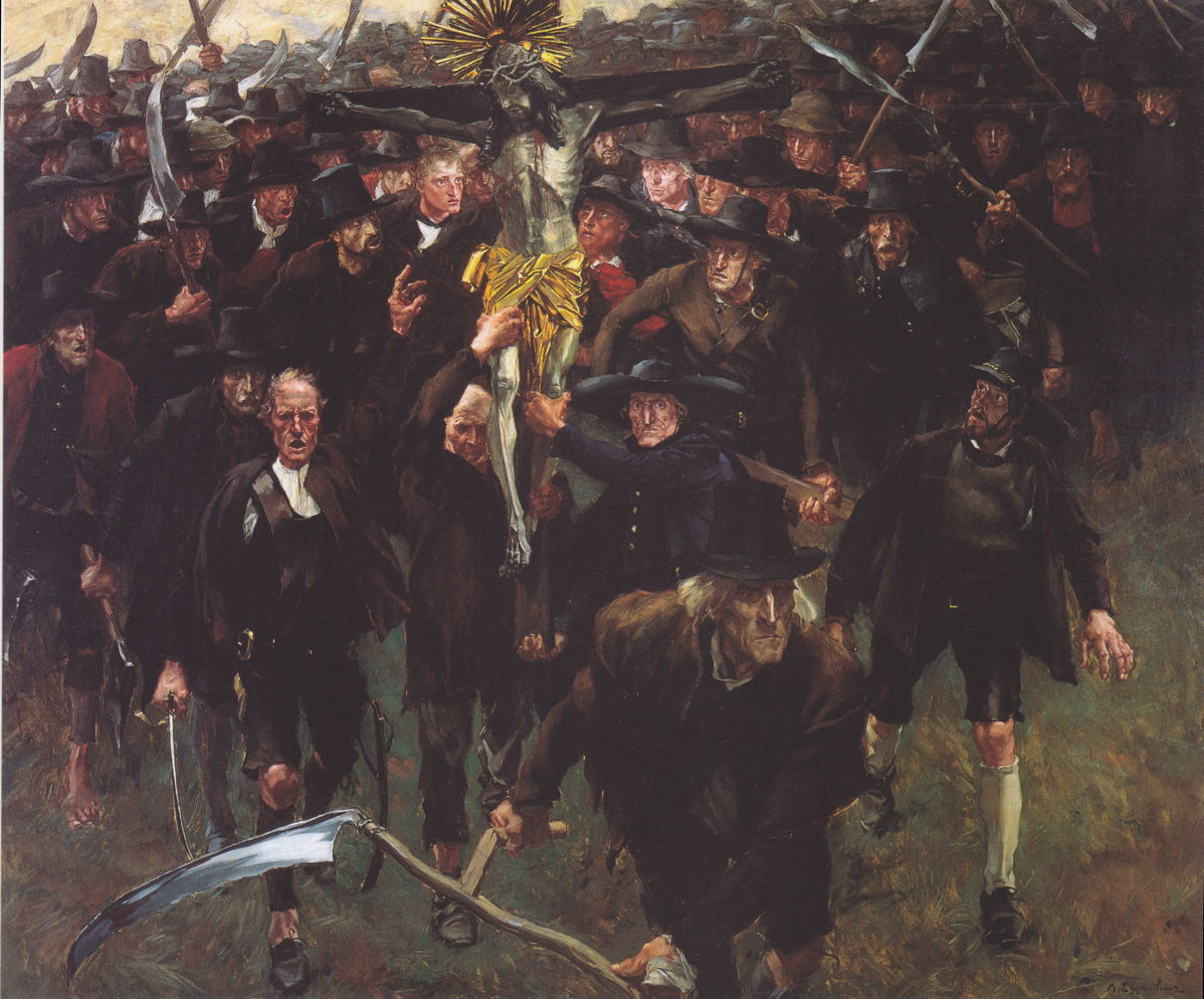
The Cross, completed between 1898 and 1901, takes the same historical period into a crowded public scene. At its center, the Capuchin priest Pater Joachim Haspinger raises a crucifix as peasants gather around him, carrying scythes and a few old sabres. The painting earned Egger-Lienz the Grand State Medal in Gold when it was shown at the Künstlerhaus in Vienna in 1901. Haspinger’s uprising failed; he fled to Switzerland, later returned to Austria and died there in 1858.
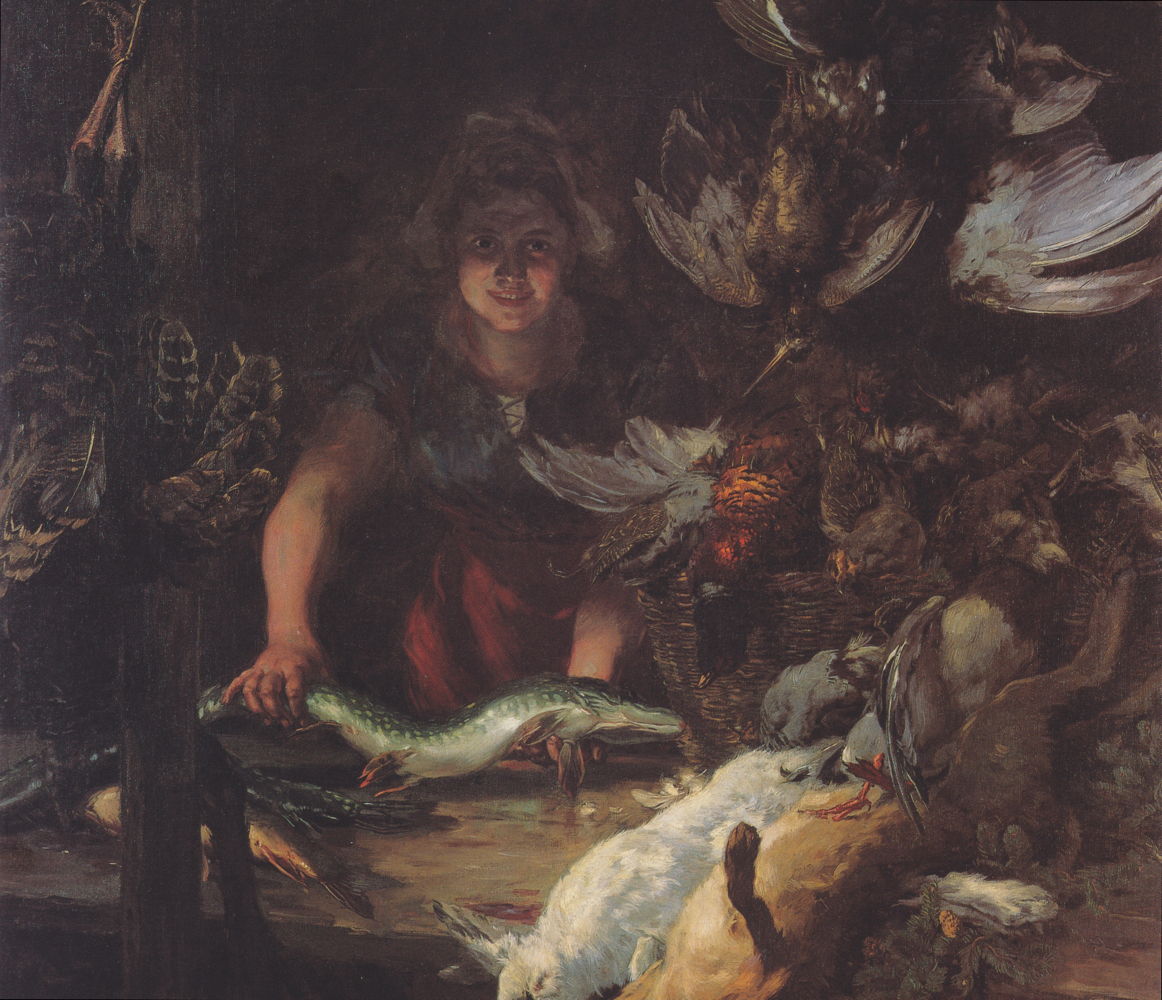
A sharp change in mood comes with The Venison Dealer (1902), a portrait of a smiling young woman set among game. The title promises venison, but none is visible. The shift from historical tension to a warm, richly arranged portrait shows how readily Egger-Lienz moved between subjects.
A looser language
By 1903, Egger-Lienz was loosening his handling of paint. Christmas Eve recasts the adoration of the shepherds in what appears to be a Tyrolean cowshed, using light to shape the scene. The social realism of Jean-François Millet seems to inform this work and the paintings that followed. The Tyrolean Waitress brings the focus back to everyday life: a young woman pours a drink while a customer smokes in a bright room behind her.


Millet’s influence is clearest in the 1903 version of The Sower, a subject Egger-Lienz returned to later. Earth colors, simplified forms and increasingly loose brushwork point toward the style that would define much of his career. His exposure to Ferdinand Hodler’s paintings in 1900 had also marked a turning point, although Egger-Lienz resisted being described as Hodler’s follower and regarded him as a competitor. The early work shows an artist taking in new influences while building a visual language rooted in Tyrolean people, places and history.