iPhone Duo Teardown Points to a Possible Foldable Screen Stress Point
iFixit’s hinge analysis suggests a support bar could stress the Duo’s inner display. Its teardown also finds repairability strengths and costly repair hurdles.
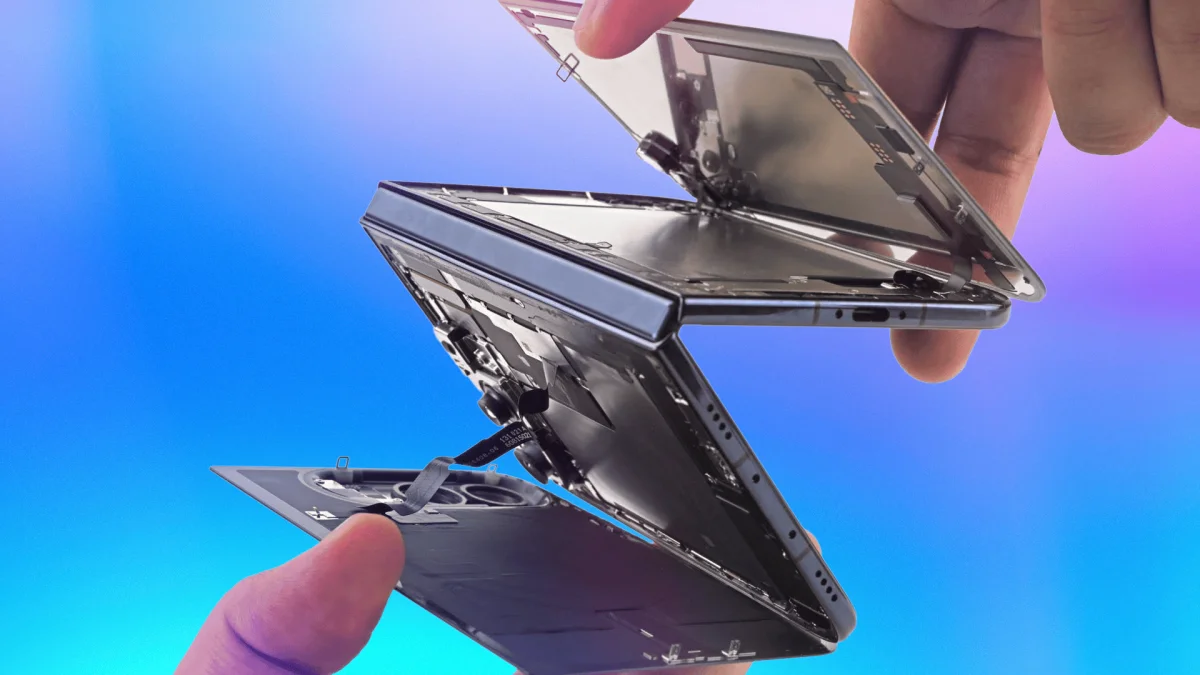
The iPhone Duo’s early screen complaints may have a mechanical explanation. iFixit’s teardown analysis points to a possible stress spot near the hinge, where a support bar may not lower far enough as the phone closes. That’s a plausible lead, not a confirmed cause: the reports describe cracks and faulty pixels around the fold, but the analysis doesn’t establish that every affected phone failed for the same reason.

That distinction matters for a device priced from $2,000. Foldable displays repeatedly bend around a hinge, so the design has to manage forces across the screen, its supports and the cables that connect its two halves. A small mismatch in how those parts move could concentrate pressure in one area. Whether that is what’s happening in customer devices remains an open question.
The reported faults include cracks and lines of defective pixels along the hinge, according to MacRumors and Reddit posts. Those accounts describe symptoms, not a controlled diagnosis. The location is nevertheless a useful clue: a failure concentrated near the fold directs attention to the hinge assembly and the display’s support structure.

What iFixit’s hinge model suggests
To investigate, iFixit combined teardown footage, patents and CT scans gathered while assessing the phone’s repairability. It then built a three-dimensional model of the hinge. That let the team examine how the support parts, connecting cable and nearby components sit beneath the inner screen.
The suspected area lies just below the cable joining the two displays, where several connectors and edges meet. iFixit’s Elizabeth Chamberlain pointed out that multiple parts converge there, leaving more than one possible source of trouble. The center pivot also differs from the rest of the hinge, raising the possibility that movement in that section could be involved.
In one closing simulation, iFixit found that the center support bar did not drop far enough. The curved portion of the display then came down onto it, which could create a localized stress point near where users have reported damage. The proposed mechanism is straightforward: if the support and screen don’t clear each other as intended, closing the phone could put extra pressure on a small part of the display.
But a simulation identifies a way a failure could happen; it doesn’t prove that this is the source of the reported cases. The material in the source doesn’t establish how often the support bar behaves this way, whether affected phones share a manufacturing issue, or whether other factors explain some of the damage. iFixit’s interactive CT scan offers a closer look at the parts and their placement, but further device testing would be needed to connect the model to individual failures.
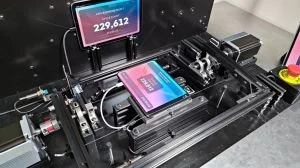
CNET is also testing the Duo with a machine that folds it 900 times per hour. At the time of the report, its test unit had passed 235,000 folds without a problem. That result provides a useful counterpoint to user reports, but it describes one test unit under a specific procedure. It can’t settle how the phone holds up across different devices and everyday use.
Repairability helps, but the fold remains difficult
iFixit gave the Duo a repairability score of 5 out of 10 and called it the most repairable foldable smartphone the team had taken apart. That score is below the 7 out of 10 ratings iFixit gave the iPhone 18 Pro and Pro Max, yet it stands out among foldables. A better teardown score can make some repairs simpler; it doesn’t make a complex inner-screen or hinge repair quick or inexpensive.

The Duo’s screen trim is easier to remove than the trim iFixit encountered on Samsung’s Galaxy Z Fold 8, which crumbled during removal. Inside, the Duo’s flat component layout also improves access. The cameras and logic board can be reached without dismantling the entire phone, reducing the number of parts that need to come out when work is limited to those components.
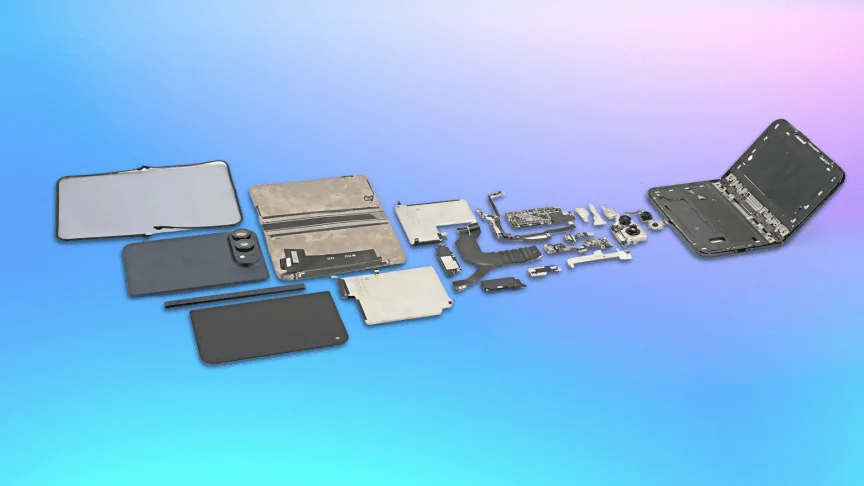
Battery removal is another relative strength. The Duo uses electrically releasable adhesive: applying a low voltage helps release the battery, so a repairer doesn’t have to bend or pry the cell out. Avoiding that kind of force lowers the chance of damaging the battery during removal. The technique is also used in other Apple devices, according to iFixit.

Access to repair instructions and parts still shapes what owners and repair shops can do. iFixit praised Apple for publishing a repair manual quickly, but said it was still waiting for parts. The source says Apple plans to charge $999 for an inner-screen replacement at a later date. That price makes the cost of a display failure a practical concern, especially alongside a phone that starts at $2,000. AppleCare coverage is another factor for buyers to weigh against the repair cost.
The next evidence to watch
The hinge and inner display pulled down the repairability score because they are difficult and time-consuming to fix. That limits the value of easier access elsewhere: a phone can be comparatively serviceable inside and still leave owners facing a major repair when its defining component fails.
For now, iFixit’s stress-point theory gives the reported damage a credible place to investigate, while the long fold test shows that at least one unit has endured extensive cycling. The clearest next evidence would come from examining more affected phones and seeing whether their damage matches the modeled contact point. Buyers should keep the reported $999 screen-replacement price in view; for Apple, the practical test is whether parts, repair access and future hinge changes address the costs and uncertainty around the fold.