Mirantis Offers Managed VMware-to-MOSK Migrations, With a Five-Week Average
Mirantis pairs migration tools with hands-on help for moving VMware workloads to MOSK, aiming to avoid new infrastructure and average about five weeks.
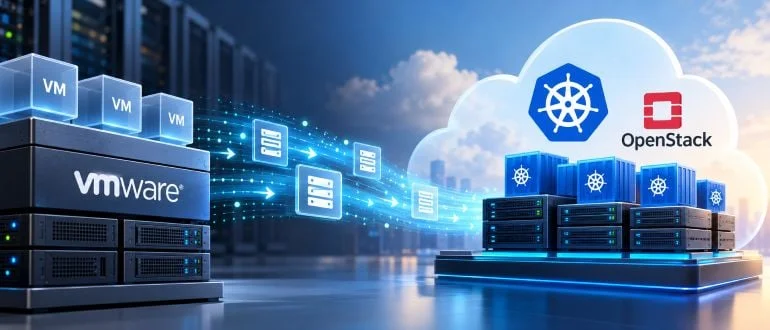
For teams weighing a move away from VMware, the hard part is often less about choosing a destination than carrying out the migration without stretching already busy infrastructure groups. Mirantis is addressing that gap with a service that combines its migration tools with hands-on help moving VMware workloads to Mirantis OpenStack for Kubernetes, or MOSK. The company says migrations take about five weeks on average, though the amount of data involved affects the timeline.

The offering builds on tools Mirantis had already made available. The change is that Mirantis staff can now take part in planning and executing migrations as a services engagement. That matters for organizations whose administrators know VMware well but have limited experience running Kubernetes environments at scale.
Migration work moves beyond tooling
Moving a workload between platforms involves more than copying virtual machines. Teams have to account for the virtual disks and the systems that depend on them, then determine how the workload will run in its new environment. Mirantis says MOSK runs Kubernetes clusters on the OpenStack cloud computing framework, giving organizations a destination that combines those technologies.
One part of Mirantis’ approach is hardened open source software that provides a capability similar to VMware’s Virtual Disk Development Kit. Mirantis says Broadcom no longer makes that kit available. Rival migration tools had relied on it, so a substitute could matter to vendors and customers planning to move workloads. The source material doesn’t describe the replacement’s technical details or spell out which migration paths it supports, leaving those as practical questions for teams assessing the service.
Mirantis includes a free assessment in the engagement. That gives organizations a chance to examine their workloads and migration needs before committing to a project. The company’s stated aim is to move workloads to MOSK without requiring customers to acquire additional infrastructure whenever possible. That qualification matters: the goal depends on the particular environment, and the article doesn’t specify what hardware or capacity conditions would make new infrastructure necessary.
VMware choices are becoming more varied
The service arrives as organizations reassess how much VMware they want to run. Broadcom is making the case for VMware Cloud Foundation 9, which brings hypervisors, virtual storage and networking services together more tightly. Some customers may decide that this package offers enough value for its higher licensing fees. Others may move selected workloads elsewhere, or place new applications on another platform while keeping existing systems in place.
That leaves companies with more than a simple stay-or-go decision. A team might retain monolithic applications on virtual machines, shift other workloads to MOSK, and use a different environment for new development. Each path brings operational questions: what will be managed in each platform, which workloads can move with limited redesign, and how much expertise will teams need after migration?
Mirantis product manager Cristian Klein said many IT groups don’t have the skills needed to move workloads from older VMware Cloud Foundation environments to an open source platform. The services offer is meant to supply that expertise during the migration. For buyers, the hands-on component may be as significant as the destination: a platform change can add demands on staff even when the migration itself succeeds.
Migration is only part of the operating cost
The average timeline of about five weeks gives teams a planning reference, not a guaranteed schedule. Mirantis says the amount of data is one factor; the source doesn’t provide a workload size, service scope or other assumptions behind that average. Organizations should therefore use the free assessment to establish what the estimate means for their own systems, including how dependencies and existing operations affect the work.
There’s also a longer-term choice between keeping applications largely as they are and rewriting them to make fuller use of cloud-native design. The source notes that many organizations still deploy applications on hypervisors to isolate workloads. Moving a virtual machine to a Kubernetes-based environment doesn’t by itself make the application cloud-native, and teams may still have to operate legacy software alongside newer services.
That mix can increase the number of platforms administrators must understand without expanding the size of the team. More Kubernetes deployments may follow as companies respond to VMware licensing changes, while AI workloads add another reason to consider Kubernetes. Klein said AI tools are reducing the engineering expertise needed to deploy clusters, but organizations still need to plan how those clusters will be run and supported.
Mirantis’ service makes a migration option more accessible to teams that lack internal Kubernetes experience, while its software addresses one tool dependency in the move. The useful next measure will be how the assessment translates into project scope, infrastructure requirements and ongoing operating work. A five-week migration can start the transition; it doesn’t settle which workloads belong on MOSK or how many platforms a team can sustainably manage.